
Caulk vs. Weatherstripping: Choosing the Right Draft Seal for Each Spot
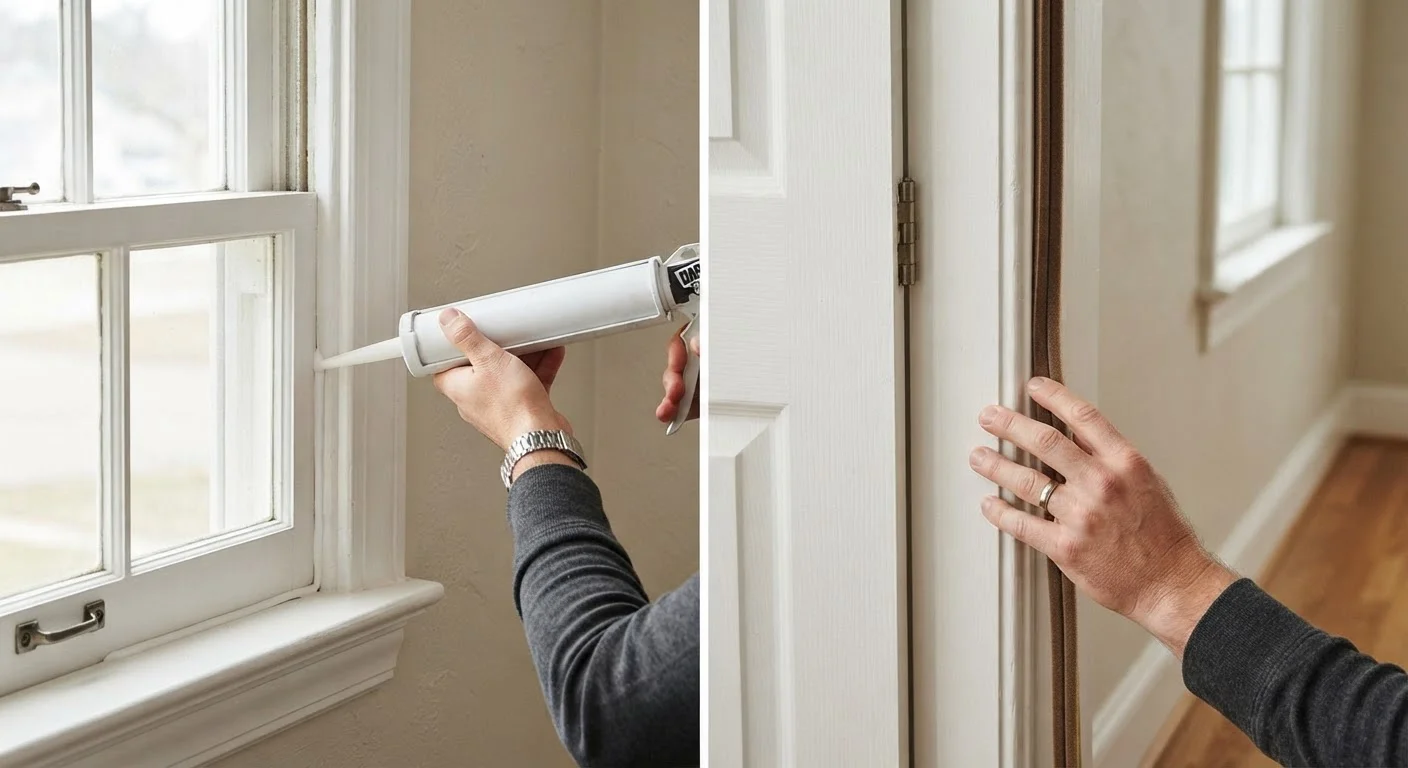
Photo credit: FaqInsider.com
In this article
Both caulk and weatherstripping stop drafts and moisture—but they're suited to different gaps. Here's how to match each material to its job.
Key Takeaways
- Caulk is designed for stationary joints; weatherstripping handles gaps that open and close.
- Using caulk where weatherstripping belongs - or vice versa - can cause premature failure within one season.
- Most exterior doors need both: caulk around the frame's perimeter and weatherstripping along the moving door edges.
- Silicone caulk is the most durable option for outdoor and moisture-prone locations.
- Weatherstripping comes in foam, felt, vinyl, and door sweep forms - each suited to different pressure levels.
- Inspect both seals annually, ideally before winter, for cracking, compression loss, or gaps.
Why the Distinction Matters
Drafts cost real money. The U.S. Department of Energy has long cited air leaks around doors and windows as a significant contributor to residential heating and cooling losses. But applying the wrong sealant to the wrong gap doesn't just fail to fix the problem - it can make the next repair harder by leaving adhesive residue or hiding the root cause.
The core rule is simple: if the surfaces stay still, use caulk; if they move relative to each other, use weatherstripping. Everything else follows from that principle. A window frame nailed to rough framing doesn't budge - caulk is right at home there. A door that swings open dozens of times a week needs a seal that can compress and spring back without tearing or losing its bond.
For a broader look at how these two products relate across different parts of the home, see our overview of caulking vs. weatherstripping for the full picture.
| Criterion | Caulk | Weatherstripping |
|---|---|---|
| Surface movement | Stationary joints only | Moving or compressing surfaces |
| Typical locations | Window frames, baseboards, pipe penetrations | Door edges, sashes, thresholds |
| Application method | Caulk gun or squeeze tube | Peel-and-stick, nail, or screw |
| Durability | 5-20 years (material dependent) | 1-5 years (use and type dependent) |
| Replaceability | Requires cutting out old material | Peel off and press on new strip |
| Best outdoor material | Silicone or siliconized latex | EPDM rubber or vinyl bulb |
| DIY difficulty | Low to moderate | Low |
Where Caulk Works Best - and What Type to Use
Caulk belongs anywhere two stationary surfaces meet and leave a gap. Common locations include:
- Window and door frames to exterior siding - the joint is fixed, exposed to weather, and prone to water intrusion. Silicone or siliconized latex caulk holds up best here because it stays flexible through temperature swings without cracking.
- Interior window trim to drywall - paintable latex caulk fills this gap cleanly and accepts a topcoat.
- Baseboards, crown molding, and interior trim joints - small gaps that don't move are ideal for paintable latex caulk.
- Penetrations through the building envelope - pipes, conduit, and wires passing through exterior walls or the rim joist need to be air-sealed; caulk (or spray foam for larger voids) is the right tool.
For windows in particular, failed caulk is one of the most overlooked sources of drafts and water damage. Our article on why caulking around windows matters walks through how to inspect and reseal properly.
Up to 30%
Heating/cooling energy lost to air leaks
The U.S. Department of Energy estimates that drafts from unsealed gaps can account for up to 30% of a home's heating and cooling energy use.
$200-$600
Estimated annual savings from sealing air leaks
The EPA's ENERGY STAR program has cited typical household savings in this range from comprehensive air sealing and insulation improvements, though results vary by home and climate.
1-5 years
Typical weatherstripping service life
Most foam and felt weatherstripping degrades within a few years on high-traffic exterior doors; denser rubber and vinyl types last longer with proper installation.
Where Weatherstripping Belongs - and Which Type Fits
Weatherstripping handles moving surfaces - the parts of a door or window that open, close, compress, and release. The main types and their uses:
- Foam tape (open- or closed-cell) - easiest to install; good for light-use windows and interior doors, but compresses permanently with heavy use, so it's not ideal for exterior entry doors.
- V-strip (tension seal) - a folded plastic or metal strip that springs open against the door stop or sash channel. Durable and nearly invisible once installed; excellent for the sides of doors and double-hung windows.
- Door sweeps - attached to the door's bottom edge, they seal the gap against the threshold. Available in aluminum with a rubber or brush insert; the brush style handles uneven thresholds well.
- Compression strips (EPDM or vinyl bulb) - mounted on the door stop molding; the door compresses the bulb when closed, creating a tight seal. These are among the most durable options for exterior doors.
When replacing weatherstripping, take the old strip to the hardware store - matching the profile precisely ensures the door closes without binding and seals without gaps.
Putting Both to Work on a Single Door
A full exterior door is the clearest example of a job that needs both products. Here's how the two work together without overlapping:
- Inspect the frame-to-siding joint on the exterior. If caulk is cracked, shrinking, or pulling away, remove the old material completely with a putty knife and utility knife, clean the surface, and apply fresh exterior-grade caulk. This seals the fixed perimeter.
- Check the door stops (the thin molding the door closes against on three sides). Replace any compressed or torn compression-style weatherstripping here. The door's movement is what this strip accommodates.
- Examine the threshold and door bottom. If daylight is visible or a sheet of paper pulls free easily when the door is closed, replace the door sweep or adjust the threshold height if it's adjustable.
Doing all three steps means you're addressing every air pathway - the static joint, the dynamic seal, and the floor gap - with the material each is designed to handle. If you're also working on tiled surfaces nearby, our guide on grout vs. caulk for tile joints explains how the same caulk-in-moving-joints rule applies to tile work as well.

Author
Home & Garden Editorial Team
Home & Garden Editorial Team is the collective byline for our editorial team and contributor network. Articles published under this byline or an editorial pen name are researched, written, and reviewed according to our editorial standards for clarity, consistency, and independence before publication.
View all articles →