
Caulking vs. Weatherstripping: Choosing the Right Seal for the Job
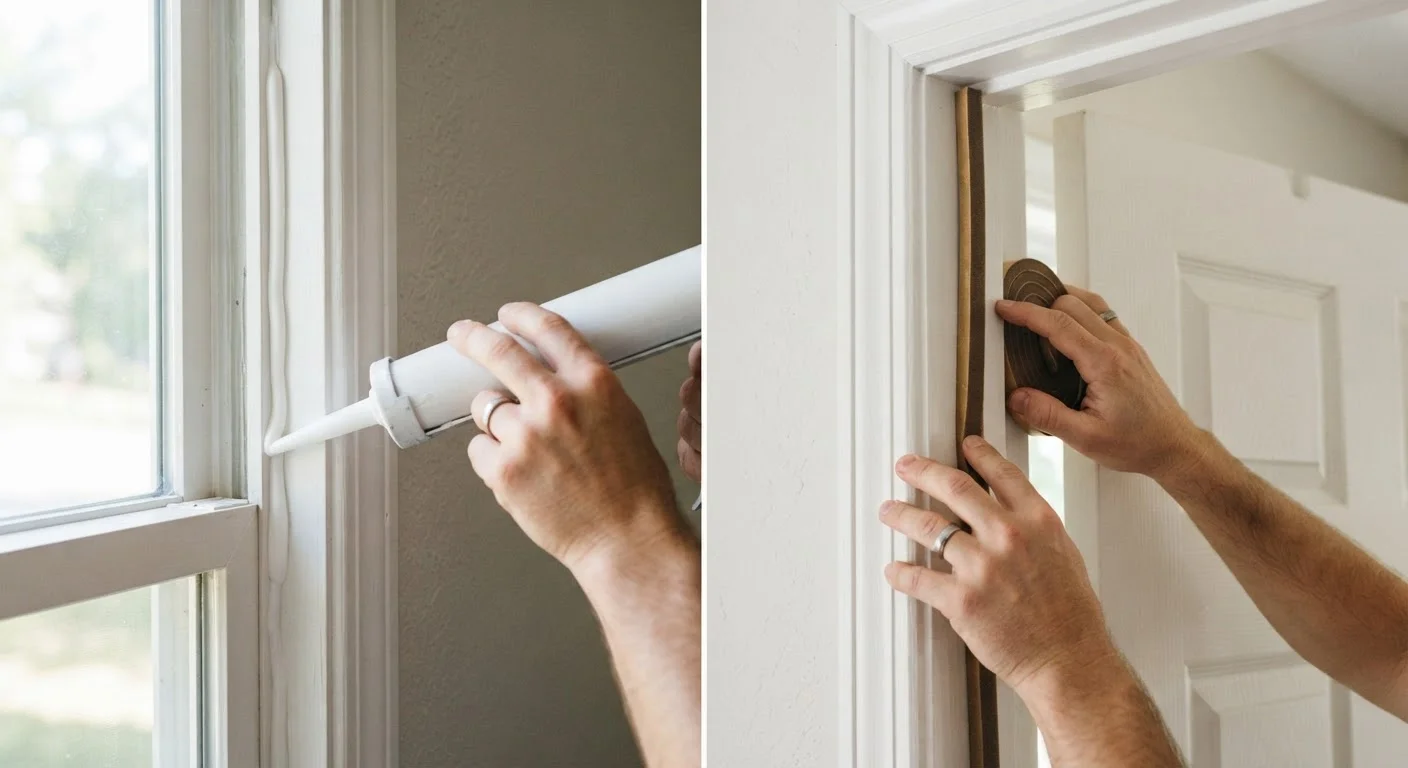
Photo credit: FaqInsider.com
In this article
Caulking and weatherstripping both seal gaps, but serve very different purposes. Learn when each approach makes sense.
Key Takeaways
- Caulk is designed for stationary gaps where two surfaces do not move relative to each other.
- Weatherstripping is engineered for moving parts - doors, operable windows, and hatches - that open and close repeatedly.
- Using the wrong material in the wrong location leads to premature failure and ongoing energy loss.
- Most homes need both products applied in their respective correct locations.
- Weatherstripping compresses to form a seal; caulk adheres and cures to fill a gap permanently.
Why Getting This Right Actually Matters
Drafts, moisture intrusion, and rising heating bills are often traced back to one simple mistake: using the wrong sealing material for the wrong gap. Caulk and weatherstripping both block air and moisture, but they are engineered for fundamentally different applications. Reaching for the wrong one doesn't just waste materials - it creates a seal that fails faster and leaves you back at square one within a season or two.
The U.S. Department of Energy notes that air leaks through gaps around doors, windows, and other openings can account for a significant share of a home's heating and cooling energy loss. Addressing those leaks is one of the most cost-effective maintenance tasks a homeowner can perform - but only when the right material meets the right gap. See our seasonal home preparation guide for a broader look at winterizing your home.
| Criterion | Caulking | Weatherstripping |
|---|---|---|
| Surface type | Stationary, fixed joints | Moving edges of doors and windows |
| How it seals | Adheres and cures to fill a gap | Compresses when closed, recovers when open |
| Typical lifespan | 5-10 years (exterior grade) | 1-5 years depending on material and use |
| Common materials | Silicone, latex, polyurethane | Foam tape, V-strip, felt, door sweeps |
| Failure mode | Cracks or peels if applied to moving parts | Compresses permanently or tears over time |
| DIY difficulty | Low to moderate; requires prep and smoothing | Low; cut to length and press in place |
| Where NOT to use | Door edges, operable window sashes | Fixed wall joints, pipe penetrations |
Caulking: Where and When to Use It
Caulk is an adhesive sealant that is applied wet, then cures into a flexible solid. Its job is to fill a fixed, stationary gap - one where the two surrounding surfaces do not move relative to each other once installation is complete. Common caulking locations include:
- The joint between a window or door frame and the exterior wall cladding or interior drywall
- Along the base of exterior door thresholds where they meet the floor
- Around pipe or wire penetrations through walls or floors
- Along the top and sides of baseboards and crown molding
- At the corners of bathtubs, showers, and sinks where they meet the wall
For exterior applications, silicone or siliconized latex caulks hold up best against UV exposure and moisture. For interior trim work, paintable latex caulk is easier to apply, smooth, and finish. Window caulking in particular is one of the most overlooked sources of drafts and water damage in older homes.
One important rule: never apply caulk to a joint that will experience regular movement. If you caulk a door edge that opens dozens of times a day, the cured material will crack and pull away - often within weeks.
25-30%
Home energy loss from air leaks
The U.S. Department of Energy estimates that air leaks through gaps and cracks can account for 25-30% of heating and cooling energy use in a typical home.
~$0.05-$0.50/ft
Typical weatherstripping material cost per foot
Material costs vary widely by type - foam tape sits at the low end while metal tension strips cost more, though both are among the most affordable home maintenance materials available.
Weatherstripping: Where and When to Use It
Weatherstripping is a compressible material applied to the moving edges of doors and operable windows. When the door or sash closes, the weatherstripping is compressed between the two surfaces, forming a seal. When it opens, the material springs back. This ability to compress and recover repeatedly is what makes it suited for movable parts - and what makes caulk entirely wrong for the same job.
Common weatherstripping locations include:
- Along the top and side jambs (door stops) of exterior entry doors
- Around the sash edges of double-hung, casement, and sliding windows
- At the bottom of doors via a door sweep or threshold seal
- Around attic hatches and pull-down stair openings
Weatherstripping materials vary: foam tape is inexpensive and easy to install but wears faster; V-strip (tension seal) is durable and suited for the sides of double-hung windows and doors; felt is least durable and typically only appropriate for mild climates or low-traffic applications. Door sweeps address the gap at the floor, which is often the largest single source of draft in an exterior door assembly.
For a more detailed look at matching sealing materials to specific gaps, our article on choosing the right draft seal for each spot goes deeper on product types and installation tips.
Applying Both Correctly: A Few Practical Notes
Neither material performs well over a dirty, wet, or deteriorated surface. Before applying caulk, remove any old sealant completely, clean the joint with rubbing alcohol or a mild cleaner, and allow the surface to dry thoroughly. Most exterior caulks require temperatures above 40°F during application and an initial cure period to adhere properly - check the manufacturer's label for the specific product you're using.
For weatherstripping, start by cleaning the door stop or sash channel. Measure carefully and cut strips to length before peeling any adhesive backing. Press firmly and evenly, and test the door or window operation before considering the job complete. If the door drags or feels stiff, the strip may be too thick for that gap - a common issue with adhesive foam tape applied too thickly.
Most exterior doors and windows benefit from both materials applied in their respective correct zones: caulk at the fixed frame-to-wall joint, weatherstripping at the moving sash or door edge. They are complements, not competitors. If you're also working on tiled surfaces nearby, our guide on grout vs. caulk for tile joints covers where caulk belongs in wet areas - and where grout should be used instead.
When to Call a Professional
Most caulking and weatherstripping tasks are well within DIY reach. However, if you discover significant rot, structural gaps, or damaged framing around a door or window when you begin the work, stop and consult a qualified contractor before sealing over the problem. Sealing over moisture-damaged wood can accelerate hidden decay. Permits are not typically required for sealing and weatherstripping work, but always verify local requirements for any associated repair work.

Author
Home & Garden Editorial Team
Home & Garden Editorial Team is the collective byline for our editorial team and contributor network. Articles published under this byline or an editorial pen name are researched, written, and reviewed according to our editorial standards for clarity, consistency, and independence before publication.
View all articles →