
Home Insulation Types Explained: Batts, Blown-In, Spray Foam, and Rigid Board
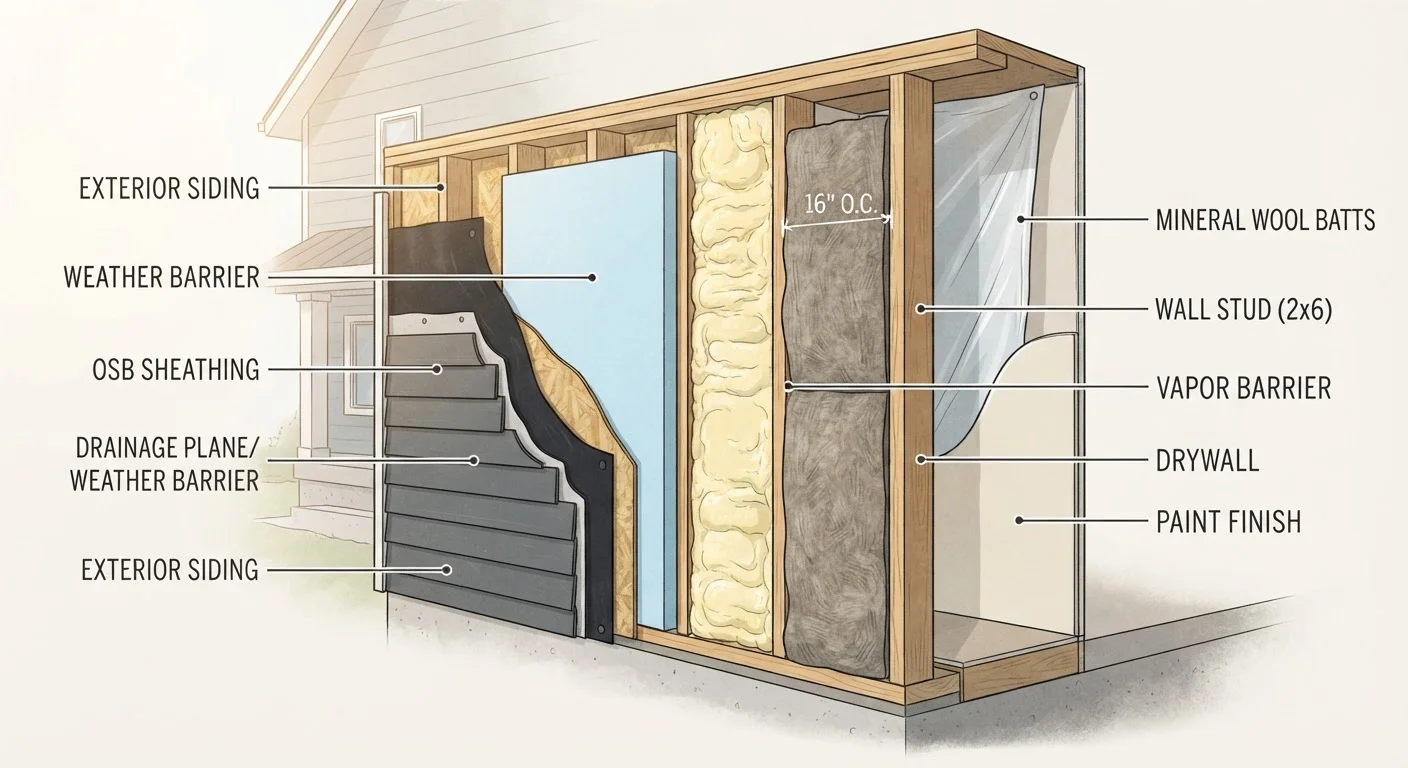
Photo credit: FaqInsider.com
In this article
Insulation comes in several forms, each suited to different spaces and climates. Here's how each type works and where it's typically used.
Why Insulation Type Matters
Not all insulation is interchangeable. Each type has a different physical form, installation method, and performance profile - which means the right choice depends heavily on where it's going, your climate zone, and the existing structure of your home. Choosing the wrong type isn't just wasteful; it can leave gaps that drive up energy bills and allow moisture problems to develop over time.
The four main residential insulation types are batt insulation, blown-in insulation, spray foam, and rigid board. Each has strengths and limitations worth understanding before any installation decision is made.
| Batt Insulation R-Value Range | R-11 to R-38 (varies by thickness and material) |
| Blown-In Cellulose R-Value Per Inch | Approximately R-3.2 to R-3.8 |
| Closed-Cell Spray Foam R-Value Per Inch | Approximately R-6 to R-7 |
| Rigid Board (XPS) R-Value Per Inch | Approximately R-5 |
| Professional Installation Required | Spray foam (both types); blown-in typically requires rental equipment or a contractor |
| Most DIY-Accessible Type | Batt insulation in open cavities |
For a broader look at how insulation fits into seasonal home care, see our winter home preparation guide.
Batt Insulation
Batt insulation - sometimes called blanket insulation - comes in pre-cut panels or rolls of fibrous material, most commonly fiberglass or mineral wool (also called rock wool or slag wool). Batts are sized to fit standard stud and joist spacing, typically 16 or 24 inches on center, making them one of the more DIY-accessible options for open wall cavities, floors, and attic floors.
How it performs: Fiberglass batts typically deliver R-values between R-11 and R-38 depending on thickness. Mineral wool batts run slightly higher per inch and also offer better fire and moisture resistance. Neither type air-seals on its own - batts slow conductive heat transfer but do not stop air movement through gaps.
Where it's commonly used: New construction framing, open attic floors, basement rim joists, and garage ceilings. Batts are less practical in finished walls or irregularly shaped cavities.
What to watch for: Compression reduces R-value significantly. Batts must be cut carefully around electrical boxes, pipes, and other obstructions to avoid voids. Improper installation is one of the most common sources of insulation underperformance. See common insulation mistakes for more detail.
Blown-In Insulation
Blown-in insulation - also called loose-fill - uses a machine to blow small particles of material into a space. The two most common materials are fiberglass loose-fill and cellulose (made from recycled paper treated for fire resistance). Both conform to irregular cavities, making them well-suited to existing structures where opening walls isn't practical.
How it performs: Cellulose typically achieves R-3.2 to R-3.8 per inch; fiberglass loose-fill ranges from R-2.2 to R-2.9 per inch. Coverage depth determines total R-value, and settling over time - particularly with cellulose - can reduce it slightly.
Where it's commonly used: Attic floors are the most common application, where it can be blown to nearly any depth quickly. It's also used in closed wall cavities by drilling small holes, then patching - a technique often used during energy retrofits.
Blown-In Insulation and Settling
Cellulose loose-fill can settle by up to 20% over time, which reduces total R-value. Installers typically account for this by blowing insulation to a greater initial depth than the final target. When getting estimates for blown-in work, ask how settling is factored into the installation depth.
For attic-specific considerations, the relationship between insulation depth and ventilation is important. Our attic insulation and ventilation guide explains how these systems interact.
Spray Foam Insulation
Spray polyurethane foam (SPF) is applied as a liquid that expands and hardens in place, simultaneously insulating and air-sealing. It comes in two forms: open-cell and closed-cell, which differ significantly in density, R-value, moisture permeability, and cost.
How it performs: Closed-cell spray foam delivers roughly R-6 to R-7 per inch - the highest of any common residential insulation. Open-cell foam is softer and more permeable, offering around R-3.5 to R-4 per inch but at a lower cost. Closed-cell also acts as a vapor retarder; open-cell does not.
Where it's commonly used: Rim joists, crawl spaces, attic roof decks (unvented attic assemblies), and areas where air sealing is as important as thermal resistance. It can be applied to irregular shapes that batts or blown-in cannot reliably fill.
Important considerations: Professional installation is required - the chemicals involved require proper protective equipment and ventilation, and improper mixing ratios affect both performance and off-gassing. For a deeper comparison of foam types, see our open-cell vs. closed-cell spray foam breakdown.
Rigid Board Insulation
Rigid insulation panels are manufactured boards made from foam materials - most commonly expanded polystyrene (EPS), extruded polystyrene (XPS), or polyisocyanurate (polyiso). Unlike the other types, rigid board holds its shape and can be used on surfaces where flexible insulation won't stay in place.
How it performs: R-values vary by material: EPS averages R-3.6 to R-4 per inch; XPS runs around R-5 per inch; polyiso can reach R-6 to R-6.5 per inch, though its effective R-value can decrease in cold temperatures - a consideration in northern climates.
Where it's commonly used: Exterior wall sheathing, basement walls, under concrete slabs, and as a thermal break in wall assemblies. Rigid board is particularly useful where cavity depth is limited or where continuous insulation is needed to reduce thermal bridging through framing members.
What to watch for: Most foam boards are combustible and must be covered with a thermal barrier (such as drywall) when used in interior living spaces. Local building codes govern this requirement - always verify applicable rules with your local building department before installation.
R-Value
A measure of thermal resistance - how well a material resists heat flow. Higher R-values indicate better insulating performance. Required R-values vary by climate zone and building assembly.
Thermal Bridging
Heat transfer through a conductive element - such as a wood or metal stud - that bypasses the insulation in a wall cavity. Continuous insulation layers help reduce this effect.
Vapor Retarder
A material that slows the movement of moisture (water vapor) through a wall or ceiling assembly. Reducing vapor diffusion helps prevent condensation and moisture damage within building cavities.
Air Sealing
The process of closing gaps, cracks, and penetrations in a building envelope to reduce uncontrolled air movement. Air sealing and insulation address different energy-loss mechanisms and work best together.
Loose-Fill
Insulation made of small, discrete particles blown into place using pneumatic equipment. Loose-fill conforms to irregular cavities and is common in attic applications.
Thermal Break
A layer of insulating material placed to interrupt a conductive path through a wall assembly, reducing heat transfer across structural elements like studs or framing.

Author
Home & Garden Editorial Team
Home & Garden Editorial Team is the collective byline for our editorial team and contributor network. Articles published under this byline or an editorial pen name are researched, written, and reviewed according to our editorial standards for clarity, consistency, and independence before publication.
View all articles →