
What Homeowners Get Wrong About Insulation
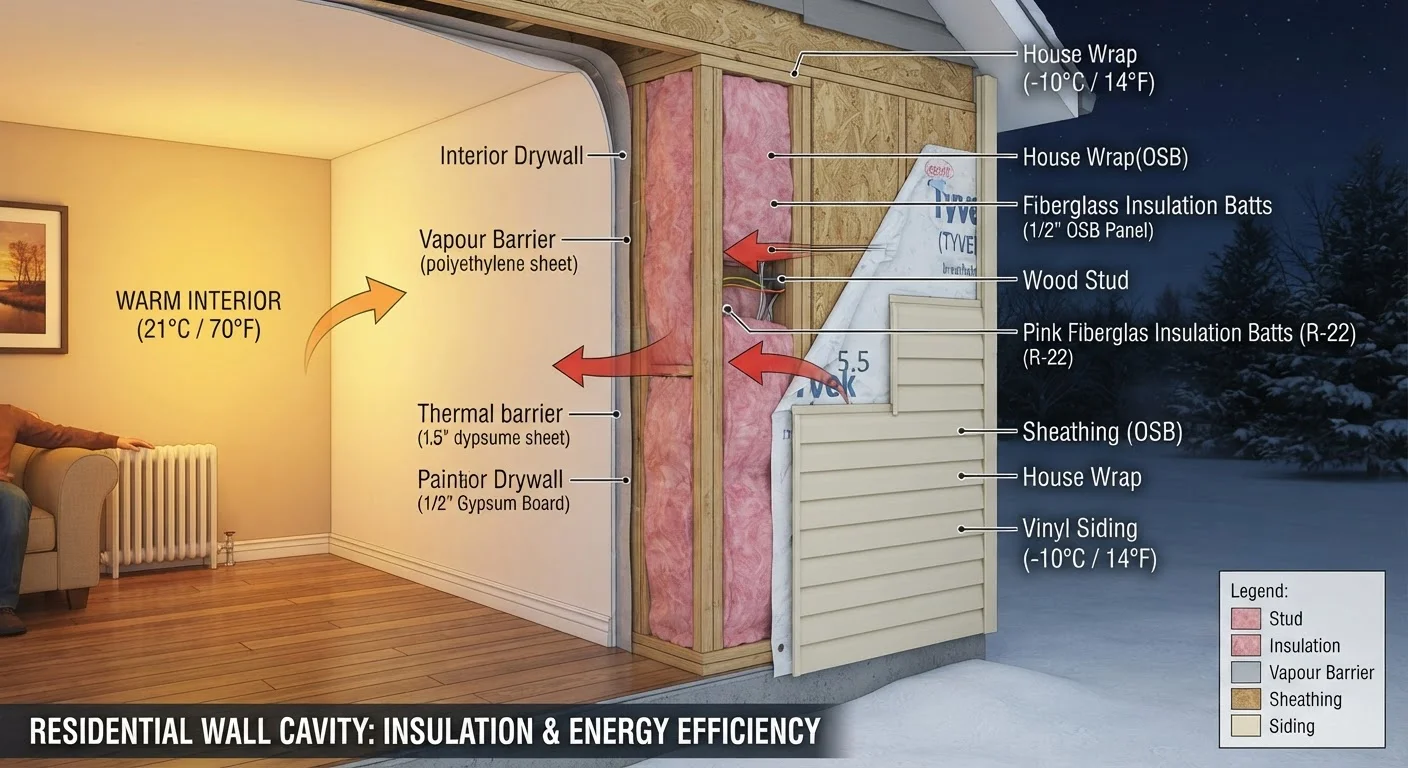
Photo credit: FaqInsider.com
From R-value misconceptions to vapor barrier confusion, this piece corrects the most widely held insulation myths with accurate, practical explanations.
Key Takeaways
- More insulation is not always better - the right R-value depends on your climate zone and location in the home.
- Insulation slows heat transfer but does not stop air leakage; sealing gaps is a separate and essential step.
- Vapor barriers are not universally required and can cause moisture damage if installed incorrectly.
- Compressed insulation loses effectiveness - proper installation thickness matters as much as material choice.
- Attic insulation and ventilation must work together; insulating alone without considering airflow can backfire.
Why Insulation Myths Are So Costly
Insulation is one of the highest-impact investments a homeowner can make in comfort and energy efficiency - yet it's also one of the most misunderstood. Decisions based on faulty assumptions can lead to wasted money, moisture problems, and a home that never feels quite right regardless of how the thermostat is set.
The myths below aren't obscure; they're widespread enough that even experienced DIYers and some contractors repeat them. Correcting these misunderstandings is the first step toward making insulation decisions that actually perform. For a broader look at how attic insulation and ventilation interact, see our companion guide on how attic insulation and ventilation work together.
Myth
A higher R-value is always better, no matter where you live or where in the home it's installed.
Fact
R-value recommendations are climate-specific and location-specific; exceeding them offers diminishing returns while increasing cost.
R-value measures thermal resistance - how well a material slows heat flow. The U.S. Department of Energy publishes recommended R-values by climate zone and by location (attic, walls, floors, crawlspace). Adding attic insulation beyond the recommended level for your zone typically yields very little additional energy savings. More importantly, wall cavities and other constrained spaces have fixed depths, so matching the right insulation type to the available space matters more than chasing the highest number on the label.
Myth
Insulation keeps cold air out, so once it's installed you don't need to worry about drafts.
Fact
Insulation resists heat transfer but does not block air movement; draft elimination requires dedicated air sealing.
These are two distinct building science concepts. Insulation (fiberglass batts, cellulose, mineral wool) is porous and allows air to pass through or around it. Air sealing - using caulk, weatherstripping, spray foam in small gaps, and rigid blocking at major penetrations - is what actually stops infiltration. A home can have generous insulation and still lose substantial energy through unsealed gaps around electrical boxes, plumbing chases, and the top plates of interior walls. Effective building envelopes address both layers.
Myth
Every home needs a vapor barrier on the inside of exterior walls.
Fact
Vapor barrier requirements depend on climate, wall assembly, and local building codes - installing one incorrectly can trap moisture and cause damage.
Vapor retarders (the technically precise term for most products sold as "vapor barriers") slow moisture-laden air from moving through wall assemblies. In cold climates, they typically go on the warm-in-winter side (interior). In hot, humid climates, the logic can reverse. In mixed climates, a smart or variable-permeance retarder is often preferred. Installing a standard 6-mil poly sheet on the wrong side of the assembly - or in an assembly that doesn't call for one - can trap moisture inside the wall cavity, leading to mold and rot. Always verify requirements with local code officials or a building science professional before installing.
Myth
You can compress fiberglass batts into a thinner space and still get the rated R-value.
Fact
Compressing fiberglass insulation reduces its effective R-value proportionally; the rating assumes full, uncompressed installation.
Fiberglass batts achieve their R-value through the millions of tiny air pockets trapped within the fibers. Squeezing a full batt into a shallower cavity collapses those air pockets and measurably reduces thermal resistance. If a cavity is shallower than the batt's designed thickness, the correct approach is to use a batt rated for that depth - not to force a thicker product in. The same principle applies to blown-in insulation that has settled over time: settled material is denser and less effective than freshly installed material at the same depth.
Myth
Once insulation is installed, it performs at the same level indefinitely with no maintenance needed.
Fact
Insulation can degrade, settle, absorb moisture, or become pest-damaged - all of which reduce performance over time.
Loose-fill cellulose and fiberglass naturally settle over years, reducing depth and effective R-value. Any insulation that gets wet - from a roof leak, condensation, or plumbing failure - loses a significant portion of its thermal resistance and may develop mold. Some older homes contain insulation materials (such as vermiculite containing asbestos) that should not be disturbed without professional evaluation. Periodic inspection, particularly after any water intrusion event, is a reasonable part of home maintenance - especially in attics and crawlspaces.
Putting the Corrections Into Practice
Understanding what insulation can and can't do changes how you approach any upgrade project. Before adding material, focus on air sealing - caulking gaps around pipes, wiring penetrations, recessed lights, and rim joists. Air infiltration accounts for a significant share of heat loss in most homes, and no amount of insulation fully compensates for an unsealed envelope.
Electrical and Structural Work Near Insulation
Installing or removing insulation can expose wiring, recessed light fixtures, and other components that require specific clearances or fire-rated covers. Covering non-IC-rated (insulation contact) recessed lights with insulation is a fire hazard. If your project involves working around electrical fixtures or structural elements, consult a licensed electrician or contractor before proceeding.
When evaluating your existing insulation, don't rely on visual inspection alone. Compressed, settled, or moisture-damaged insulation may look present but perform far below its rated R-value. If you're unsure what you have or whether it's performing, learn the signs of underperforming attic insulation before committing to an upgrade path.
Different insulation types suit different locations and climates. Batts, blown-in, spray foam, and rigid board each have distinct strengths - understanding them helps you match the material to the job. Our detailed breakdown of insulation types and where each is used covers this in depth. And if spray foam is on your radar, the distinction between open-cell and closed-cell matters more than most people expect - see our guide on open-cell vs. closed-cell spray foam for a clear comparison.
Finally, insulation works best as part of a whole-house approach. Gaps in your HVAC system's airflow and maintenance can undermine even a well-insulated envelope. Treating insulation, air sealing, and mechanical systems as interconnected - rather than independent upgrades - is what delivers consistent, lasting results.

Author
Home & Garden Editorial Team
Home & Garden Editorial Team is the collective byline for our editorial team and contributor network. Articles published under this byline or an editorial pen name are researched, written, and reviewed according to our editorial standards for clarity, consistency, and independence before publication.
View all articles →