
Grass Seed vs. Sod: Which Way to a New Lawn Makes More Sense?
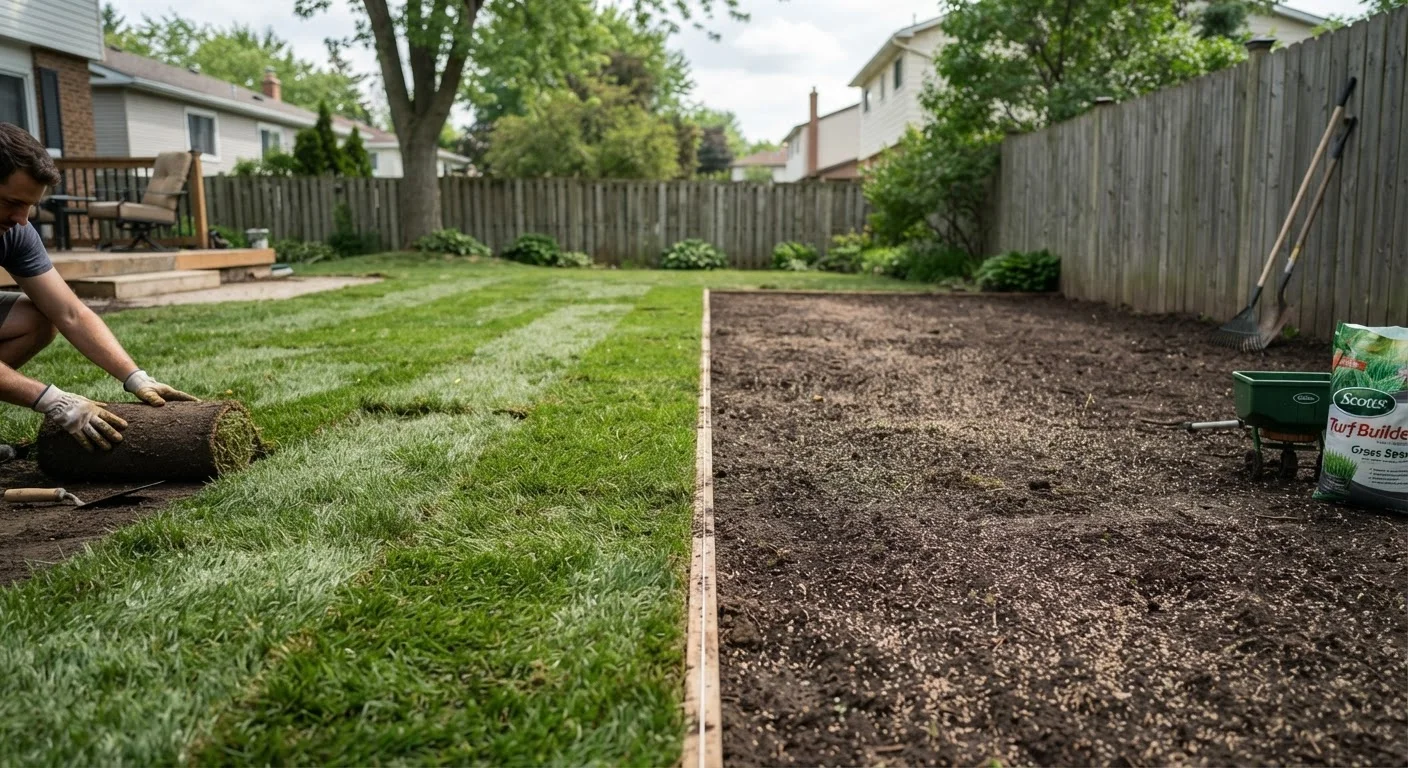
Photo credit: FaqInsider.com
In this article
Weigh the real differences between seeding and sodding a lawn — cost, timing, effort, and long-term results — before you commit.
Key Takeaways
- Grass seed typically costs significantly less per square foot than sod, but requires a longer establishment period.
- Sod delivers near-instant erosion control and usable turf within two to three weeks of installation.
- Timing matters for both: cool-season grasses seed best in fall, warm-season varieties in late spring.
- Seed gives you more variety choices; sod is limited to what your supplier grows.
- Both methods demand consistent watering during establishment - skipping this step is the most common reason either fails.
- Site preparation quality affects success more than the method itself - soil health is non-negotiable.
The Core Trade-Off: Speed vs. Cost
When you're starting a lawn from scratch - or rebuilding a damaged one - the choice between grass seed and sod comes down to one fundamental question: how much time do you have, and how much are you willing to spend?
Sod is essentially mature turf harvested in slabs and transplanted to your yard. You get instant green coverage and erosion control from day one. Grass seed, by contrast, requires germination and multiple growing cycles before it fills in completely. The payoff is substantially lower material cost and far more flexibility in grass variety.
Neither method is universally superior. Each performs differently depending on your soil conditions, climate, budget, and goals. Understanding those differences before committing will save you from a costly redo later. If your lawn already shows signs of stress - patchy, yellowing, or spongy areas - it's worth reading what those symptoms actually mean before deciding on a full renovation approach.
| Criterion | Grass Seed | Sod |
|---|---|---|
| Upfront material cost | Low - cents per sq ft | Higher - typically several times more per sq ft |
| Time to usable lawn | One full growing season or more | Two to three weeks after installation |
| Grass variety selection | Wide - many cultivars available | Limited to supplier inventory |
| Erosion control | Poor until established | Immediate upon installation |
| Installation labor | Moderate - spread and rake | High - heavy slabs, precise fitting |
| Seasonal timing sensitivity | High - must match soil temp window | Moderate - flexible but not year-round |
| Root depth over time | Deep - grows from scratch in native soil | Must adapt to new soil after transplant |
What Grass Seed Does Well - and Where It Falls Short
Grass seed is the default choice for most homeowners tackling large areas on a budget. Material costs are significantly lower, often by several times per square foot compared to sod. You also have the widest possible selection of grass types, including drought-tolerant fescues, regionally adapted blends, and specialty cultivars that may never be available as sod in your local market.
The limitations are real, though. Germination takes anywhere from one to three weeks depending on species and soil temperature, and full establishment - meaning a dense, traffic-ready lawn - can take an entire growing season or longer. During that window, the new lawn is vulnerable. Heavy rain can displace seed on slopes; foot traffic can damage fragile seedlings; weeds often seize any bare soil that isn't yet covered.
Timing is critical. Cool-season grasses (fescues, bluegrass, ryegrass) germinate best when soil temperatures are between 50°F and 65°F - typically late summer to early fall in most of the U.S. Warm-season grasses (bermuda, zoysia, centipede) need soil temperatures above 65°F and are best seeded in late spring. Planting outside these windows dramatically reduces success rates.
7-30 days
Typical grass seed germination window
Germination speed varies widely by species - perennial ryegrass can sprout in under a week, while Kentucky bluegrass may take three to four weeks under good conditions.
2-3 weeks
Time for sod roots to knit into soil
Under proper watering and moderate temperatures, most sod varieties establish enough root contact for light foot traffic within this window, according to general turfgrass management guidance.
50°F-65°F
Ideal soil temperature for cool-season seed
Soil thermometers are inexpensive and give a more accurate planting signal than air temperature alone, which is why turfgrass specialists recommend using them before seeding.
Once established, a seeded lawn is often considered hardier because the grass develops deep roots in your specific soil from the very beginning - rather than adapting to a new environment after transplant, as sod must do.
Where Sod Justifies Its Higher Price
Sod's most obvious advantage is immediacy. Within two to three weeks of installation, the roots knit into the soil and the lawn can handle light use. That timeline matters enormously if you're managing erosion on a bare slope, preparing a yard before a home sale, or simply don't want to restrict access to your outdoor space for a full season.
Installation is more labor-intensive than seeding - the slabs are heavy, must be laid tightly without gaps, and the ground needs just as much preparation as it would for seed. Poor site prep is the most common reason sod fails to take root. Compact, nutrient-poor, or poorly draining soil will undermine sod just as reliably as it undermines seed.
Sod is also limited by what your regional suppliers grow. In many areas, the selection narrows to two or three varieties. If you need a specific grass for deep shade, extreme drought tolerance, or a particular texture, sod may simply not offer it.
For irrigation planning once your lawn is in place, comparing sprinkler and drip irrigation systems can help you set up watering that keeps new turf healthy without overwatering - one of the more damaging mistakes new lawn owners make.
Sod Requires Consistent Moisture for 2-3 Weeks
Newly laid sod dries out much faster than established turf because its roots haven't yet penetrated the soil. Most turfgrass specialists recommend watering new sod at least once - and often twice - daily for the first two weeks, then tapering off as roots establish. Underwatering during this period is one of the primary reasons sod fails to take. Check moisture by lifting a corner of a slab: if the underside feels dry, water immediately.
Preparing the Ground: The Step Both Methods Share
Here's where many homeowners lose the battle before it begins: regardless of which method you choose, soil preparation determines whether your investment succeeds or fails.
Start with a soil test - available through most cooperative extension services - to understand your pH and nutrient levels. Grass generally prefers a pH between 6.0 and 7.0. If your soil is compacted, aeration before seeding or sodding improves water and root penetration considerably. Our article on when and why to aerate explains exactly when this step is warranted.
Remove existing weeds, debris, and dead vegetation. Grade the surface so water drains away from structures. Add a thin layer of quality topsoil or compost if your existing soil is poor. These steps apply equally to seed and sod - skipping them is not a shortcut, it's a setup for expensive failure.
Once your lawn is established, consistent and well-timed watering becomes the next major factor in keeping it healthy. Before forming new habits, it's worth reviewing common watering myths that damage grass - some of the most widespread advice is actively counterproductive.

Author
Home & Garden Editorial Team
Home & Garden Editorial Team is the collective byline for our editorial team and contributor network. Articles published under this byline or an editorial pen name are researched, written, and reviewed according to our editorial standards for clarity, consistency, and independence before publication.
View all articles →