
Mental Enrichment for Pets: Why Boredom Is a Health Issue
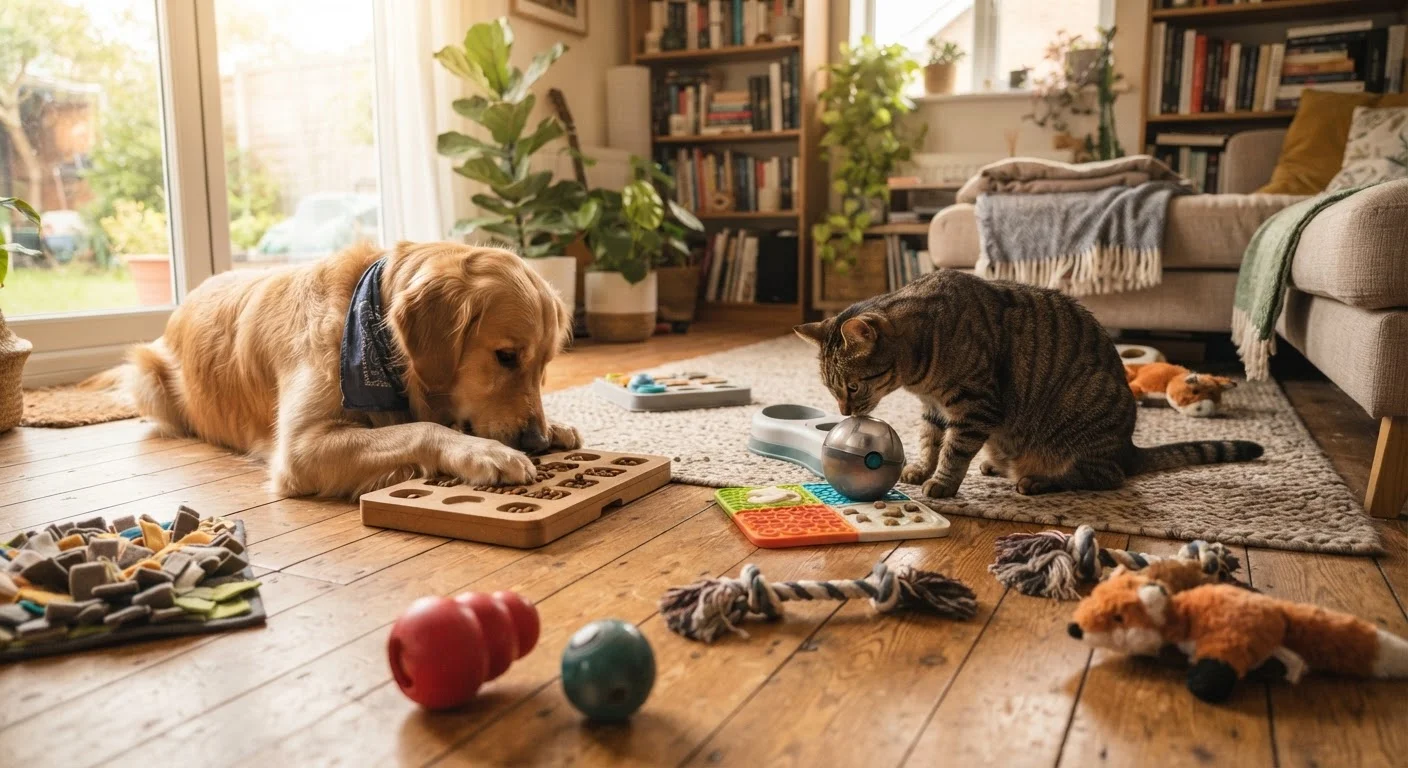
Photo credit: FaqInsider.com
In this article
Destructive behavior, excessive vocalizing, and lethargy can all stem from understimulation. Here's what enrichment actually looks like for different pets.
Key Takeaways
- Boredom in pets is not just a nuisance - it can contribute to genuine behavioral and physical health problems.
- Destructive chewing, excessive barking, and lethargy are common signs that a pet is understimulated.
- Enrichment looks different for dogs, cats, birds, and small mammals - species-specific needs matter.
- Simple, low-cost changes to a pet's environment and routine can significantly reduce boredom-related issues.
- Persistent behavior problems that don't improve with enrichment should be evaluated by a veterinarian or veterinary behaviorist.
When Boredom Becomes a Health Problem
Most pet owners think of boredom as a minor inconvenience - the chewed shoe, the knocked-over plant. But chronic understimulation is increasingly recognized by veterinary professionals as a genuine welfare concern. When a pet's behavioral needs go unmet day after day, the resulting stress can manifest in ways that look less like mischief and more like illness.
Repetitive behaviors such as tail chasing, pacing, or compulsive licking are well-documented stress responses in animals. Overgrooming in cats can lead to skin lesions. Dogs left without mental engagement may develop hypervigilance or become reactive on leash. Some pets simply shut down - becoming lethargic and withdrawn in ways owners mistake for contentment.
Understanding enrichment starts with recognizing that pets aren't passive creatures designed to wait for their owners to return. They are behaviorally complex animals with species-specific drives that don't disappear just because they live indoors. For a broader look at how stress manifests in daily pet behavior, see how everyday stress shows up in pets.
~40%
Dogs with compulsive behaviors linked to stress
Veterinary behavioral research suggests a substantial proportion of compulsive behaviors in dogs are associated with chronic stress and inadequate environmental enrichment.
5-10 min
Effective daily training session length for dogs
Short, frequent training sessions are generally more effective for cognitive engagement than single long sessions, according to animal behavior guidelines.
What Enrichment Actually Looks Like by Species
There is no one-size-fits-all enrichment plan. The goal is always the same - engage natural instincts - but the methods vary considerably.
Dogs
Dogs thrive on variety, social interaction, and problem-solving. Scent work is one of the most powerful enrichment tools available: hiding food around the house or yard engages a dog's primary sense in deeply satisfying ways. Puzzle feeders that dispense kibble slowly, short training sessions that teach new commands, and rotating through different walking routes all count as enrichment. For dogs prone to anxiety, structured routines provide predictability that reduces baseline stress - see building a daily routine for your pet for practical guidance.
Cats
Cats are driven by predatory instinct. Interactive wand toys that mimic prey movement, food puzzles, window perches with bird feeders outside, and vertical climbing structures all tap into these drives. Rotating toys regularly prevents habituation - a toy ignored after a week may become exciting again after being stored for a month.
Birds and Small Mammals
Parrots and other birds require significant cognitive engagement; foraging toys that require manipulation to access food closely replicate natural behavior. Rabbits, guinea pigs, and other small mammals benefit from tunnels, digging boxes, and safe objects to chew - these aren't luxuries but necessities for psychological health.
Building Enrichment Into Real Life
Effective enrichment doesn't require expensive equipment or hours of free time. The most sustainable approach is integrating small, varied challenges into existing routines.
Feeding time is a natural opportunity - replacing a bowl with a puzzle feeder, a lick mat, or a scatter feed in the grass turns a passive moment into an engaging one. Social interaction, even brief play sessions, provides both stimulation and bonding. Environmental variety - rearranging furniture slightly, introducing a new texture or safe scent - keeps a pet's senses active.
Start Simple, Then Build
You don't need to overhaul your pet's environment overnight. Pick one enrichment idea - a puzzle feeder at mealtime, a hide-and-seek game with treats, or a new perch position - and observe your pet's response over a few days. Gradual, consistent additions are more sustainable than an overwhelming change all at once.
It's worth noting that enrichment and outdoor access intersect in meaningful ways. Pets with outdoor access often self-enrich through exploration and sensory exposure, while indoor-only animals require more deliberate effort from owners. The indoor vs. outdoor pets comparison covers the enrichment trade-offs in more depth.
If you've introduced consistent enrichment and a pet's behavior problems persist, that's important information. Persistent issues - particularly anything resembling separation anxiety in dogs - may require assessment from a veterinary professional or certified veterinary behaviorist rather than enrichment alone. For a deeper look at what mental stimulation actually requires for different animals, what pets actually need to stay mentally stimulated offers additional detail.
This article is for general informational purposes only and is not a substitute for professional veterinary advice. If your pet is showing behavioral or physical symptoms that concern you, consult a licensed veterinarian.
Frequently Asked Questions

Author
Pets & Animals Editorial Team
Pets & Animals Editorial Team is the collective byline for our editorial team and contributor network. Articles published under this byline or an editorial pen name are researched, written, and reviewed according to our editorial standards for clarity, consistency, and independence before publication.
View all articles →