
Teaching a Dog to Walk Politely on a Leash
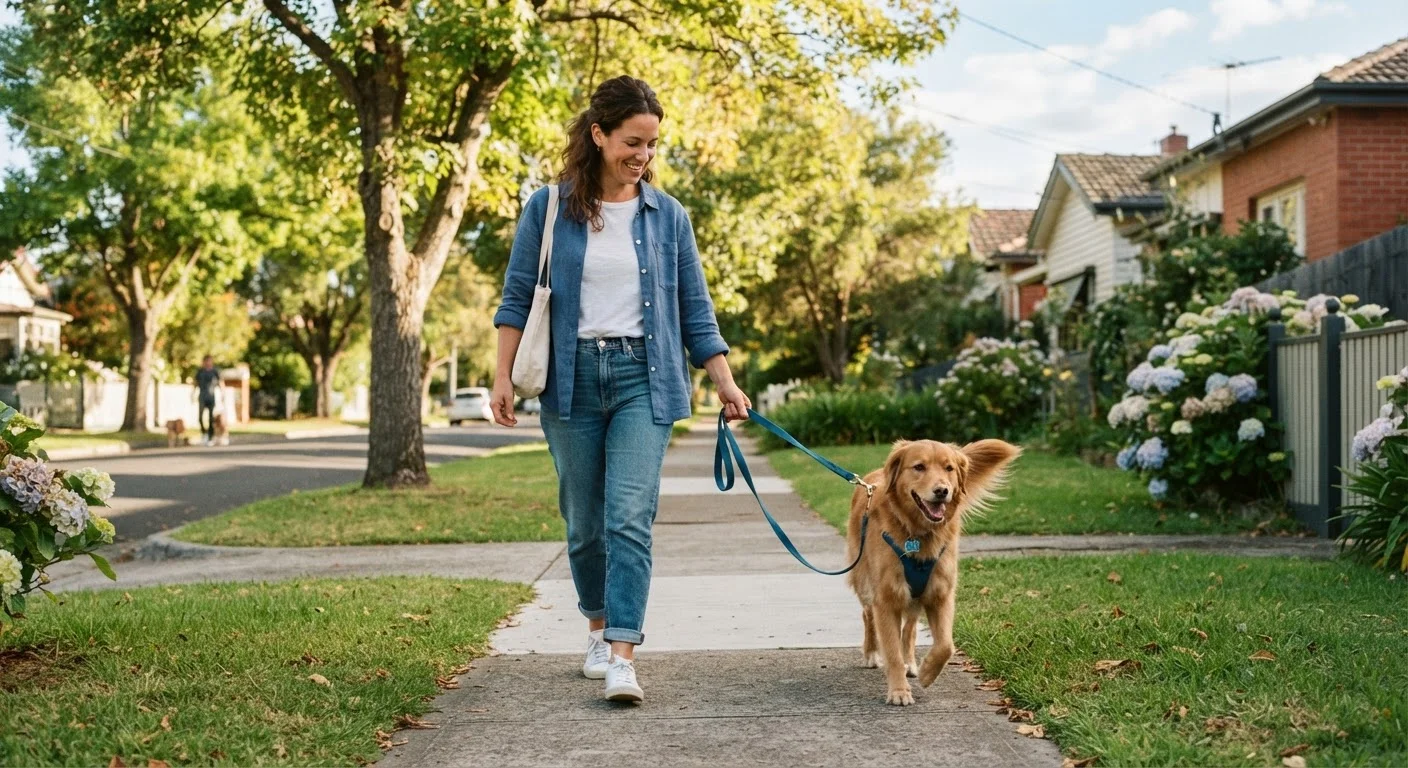
Photo credit: FaqInsider.com
In this article
Pulling on the leash is one of the most common complaints from dog owners. This step-by-step guide covers the mechanics of building a reliable loose-leash walk.
Key Takeaways
- Pulling is reinforced every time the dog moves forward while the leash is tight - stopping that pattern is step one.
- Short, consistent practice sessions work far better than occasional long ones.
- Rewarding the dog for being at your side teaches the exact behavior you want to see.
- Adding distractions too early is the most common reason progress stalls.
- Most dogs show measurable improvement within two to three weeks of daily practice.
Why Dogs Pull - and Why It Keeps Happening
Dogs pull on the leash for a simple reason: it works. When a dog lunges toward a smell or another dog and the owner follows, the dog has just learned that pulling gets it where it wants to go. That payoff is reinforced on every single walk where pulling is allowed to continue. It is not stubbornness or dominance - it is straightforward cause and effect.
Understanding this flips the training challenge. The goal is not to correct the dog for pulling; it is to make walking with a loose leash the most rewarding option available. If you are newer to training concepts, the new dog owner's guide to training basics covers the foundational mindset and tools worth reviewing before your first session.
Avoid Retractable Leashes During Training
Retractable leashes teach dogs that pulling extends their range, which is the exact opposite of what loose-leash training requires. Use a standard 4-6 foot leash throughout the training process. Once the behavior is solid, some owners reintroduce retractable leashes in specific low-risk settings - but not before.
What You Need Before You Start
Equipment matters more than most owners realize. A retractable leash, for example, actively rewards pulling because the line extends as the dog moves forward. A standard 4-6 foot leash gives you a consistent feedback loop. A front-clip harness is worth considering for strong pullers because it redirects their momentum toward you rather than allowing them to use their full body weight against you.
What you will need
Front-clip harness
Redirects the dog toward you when it pulls, reducing pulling force without discomfort.
Standard 4-6 foot leash
Gives you consistent, predictable control and prevents the dog from ranging too far ahead.
Treat pouch
Keeps rewards accessible so you can mark and reward good behavior instantly.
Clicker or verbal marker
Precisely marks the moment the dog performs the desired behavior so it knows exactly what earned the reward.
Step-by-Step: Building the Loose-Leash Walk
The process below moves from the simplest possible environment to real-world distractions. Do not rush through stages. A dog that has mastered quiet hallway walks will generalize the skill far more reliably than one pushed into a busy park too soon.
Charge your marker and load your rewards
Before going outside, spend two minutes pairing your marker (a click or the word "yes") with a treat. Say or click, then immediately deliver a treat. Repeat 10-15 times. This conditions your dog to understand that the marker means a reward is coming, which is the foundation of everything that follows.
Start indoors or in a low-distraction yard
Take your first sessions somewhere boring - a hallway, a quiet backyard, or an empty parking lot. Attach the leash and simply stand still. The moment your dog orients toward you or steps to your side, mark and reward. You are teaching the dog that being near you is the most profitable place to be.
Introduce the "be a tree" technique
Begin walking. The instant the leash goes taut, stop completely - become a tree. Do not pull back, yank, or say anything. Wait. When your dog turns back toward you and the leash slackens, mark and reward, then resume walking. This removes the payoff for pulling: the dog learns that tension stops forward progress.
Reward the position, not just the absence of pulling
Once your dog is tolerating the stop-and-wait routine, begin actively rewarding it for walking at your side with a loose leash. Mark and treat every few steps at first. Gradually increase the number of steps between rewards as the behavior becomes more reliable. You are building duration in small increments.
Add a directional cue
Once your dog is reliably staying at your side for several steps at a time, introduce a verbal cue - "with me" or "let's go" are common choices. Say the cue, take a few steps, then mark and reward the loose leash. The cue will eventually signal to your dog that this is a walking-politely moment, which is especially useful when distractions appear.
Gradually add distractions and distance
Move practice to busier environments only after your dog is succeeding in quiet ones. Start at the edge of a park, a sidewalk with light foot traffic, or near a playground at a distance. Keep sessions to 5-10 minutes. If your dog begins pulling again, you have moved too fast - return to a calmer setting and rebuild confidence before trying again.
Short Sessions Outperform Long Ones
Dogs learn better in multiple brief sessions than in one extended training block. Aim for two or three five-minute sessions per day rather than a single thirty-minute walk that ends in frustration. Ending on a success - even a small one - keeps motivation high for both of you.
Troubleshooting Common Setbacks
Even with consistent practice, most owners hit a wall at some point. Here are the patterns that cause the most trouble:
- The dog ignores treats outside. The environment is too distracting or the treats are not high-value enough. Try real meat or cheese, and return to a quieter setting.
- Progress disappears on new routes. Dogs do not automatically generalize skills to new places. Treat each new location as if you are starting fresh - reward more frequently until the dog demonstrates fluency there.
- The dog pulls toward other dogs and freezes or barks. This may indicate leash reactivity, which is a separate challenge that requires its own approach. The guide to leash reactivity explains what is happening and how to begin addressing it.
Once loose-leash walking becomes a reliable habit, daily walks become genuinely enjoyable - a shared routine rather than a tug-of-war. For ideas on making walks a consistent part of your day, the article on building a walking habit that actually sticks offers practical strategies that apply to owner and dog alike.
Consistency Across All Handlers Is Non-Negotiable
If one family member allows pulling while another enforces the stop-and-wait rule, the dog will learn that pulling sometimes works - and will keep trying. Every person who handles the leash must follow the same protocol. Inconsistency is one of the most common reasons loose-leash training stalls; for more patterns to watch for, see common habits that undermine training progress.

Author
Pets & Animals Editorial Team
Pets & Animals Editorial Team is the collective byline for our editorial team and contributor network. Articles published under this byline or an editorial pen name are researched, written, and reviewed according to our editorial standards for clarity, consistency, and independence before publication.
View all articles →