
Teaching Your Dog to Stay: Building Duration, Distance, and Distraction
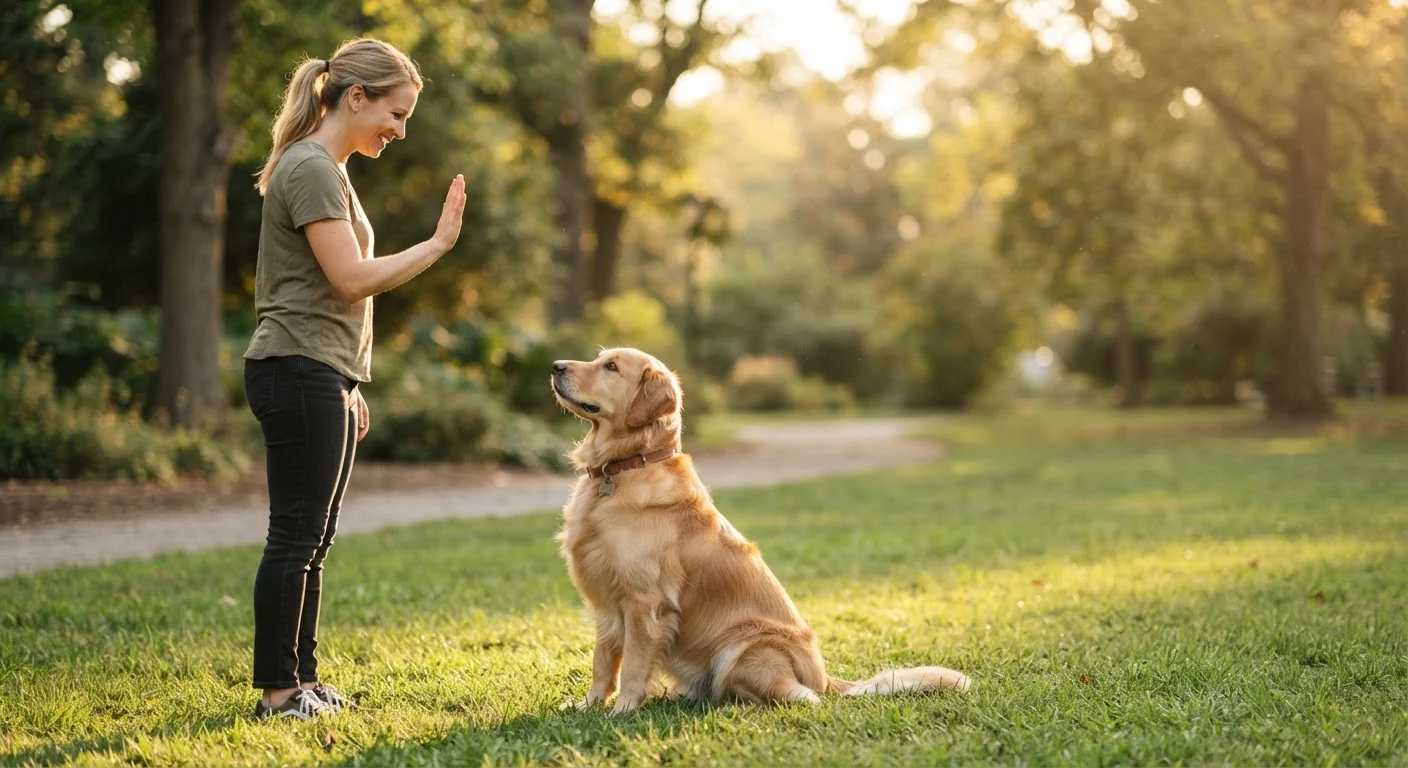
Photo credit: FaqInsider.com
In this article
Learn how to build a reliable "stay" command by gradually introducing the three D's—duration, distance, and distraction—at a pace your dog can handle.
Key Takeaways
- Teach stay by mastering one variable at a time: duration first, then distance, then distraction.
- Always release your dog with a clear release word before rewarding, so "stay" means "stay until told otherwise."
- Keep training sessions short - 5 to 10 minutes - to maintain focus and end on success.
- If your dog breaks the stay, shorten the challenge rather than repeating the same difficulty level.
- Generalize the behavior across multiple environments for a truly reliable stay.
Why "Stay" Is Worth Getting Right
A solid stay is one of the most practically useful behaviors a dog can learn. It keeps your dog safe at doorways, calm during greetings, and settled while you manage daily life. Yet it's one of the skills owners most often train inconsistently - asking for it before the dog truly understands what it means.
The key concept behind stay is the three D's: duration (how long), distance (how far), and distraction (what's happening nearby). Each one increases difficulty. The most common training mistake is layering all three at once. Instead, build them one at a time, only combining them once your dog is fluent at each individually.
Before starting, make sure your dog has a reliable sit or down - stay is always built on top of a known position. If you're working through early foundation skills, the first 30 days training roadmap is a helpful place to anchor this work.
What you will need
Step-by-Step: Teaching Stay
Work through the steps below in short, focused sessions. According to behavioral science, how long and how often you train matters as much as the technique itself - aim for 5 to 10 minutes, multiple times a day, rather than one long session.
Introduce the stay cue with zero distance
Ask your dog to sit or lie down. Say "stay" in a calm, clear voice, pause for two to three seconds, then use your release word ("okay" or "free" work well) and immediately reward. The dog should not move until the release word. At this stage you are not moving away - you are simply teaching that the position holds until you say so.
Build duration before anything else
Gradually extend the time between the stay cue and the release - from 3 seconds to 5, then 10, then 30, and so on. Vary the intervals so your dog can't anticipate when the release is coming. Reward generously for each successful stay. If your dog breaks position, shorten the duration and rebuild. Do not extend time until your dog holds reliably at the current interval.
Add distance gradually
Once your dog holds a stay for 30 or more seconds reliably with you standing right in front of them, introduce distance. Take one small step back, return, release, and reward. Increase to two steps, then three - always returning to your dog before releasing rather than calling them out of the stay. This teaches stay as a default position, not a recall cue.
Introduce mild distractions
With duration and distance solid individually, begin adding environmental challenges. Start with mild ones: toss a piece of kibble nearby, take a step sideways, clap your hands softly. If your dog holds the stay, reward enthusiastically. Gradually increase distraction intensity over multiple sessions - joggers, other dogs, or doorbell sounds are higher-level challenges to work toward later.
Combine the three D's in real-life scenarios
Once each variable is solid on its own, start combining them intentionally. Ask for a 20-second stay from five feet away while someone walks through the room. Practice at the front door before opening it. Use stay before placing a food bowl down. Real-world repetitions in meaningful contexts are what convert a training exercise into a behavior your dog offers reliably outside of formal sessions.
End Every Session on a Win
Before finishing a training session, ask for something your dog does easily and reward it well. Ending on success keeps motivation high and ensures your dog associates training with good outcomes. If a session is going poorly, simplify the task - don't push through repeated failures.
Common Pitfalls and How to Fix Them
Even with good technique, stay training stalls for predictable reasons. The most frequent issue is adding distance before duration is solid - your dog gets up because the stay itself hasn't been reinforced long enough to feel stable. Go back to shorter durations and rebuild from there.
Repeating the cue when your dog breaks the stay is another habit that quietly slows progress. Saying "stay, stay, stay" teaches your dog that the first cue is optional. Say it once, and if the dog moves, calmly reset without reissuing the command in rapid succession. For a deeper look at training patterns that create confusion, see the habits that undermine training progress.
Finally, practice in only one location will produce a dog who stays beautifully at home but nowhere else. Take your training to different rooms, the backyard, a quiet sidewalk, and eventually busier environments. This process - called generalization - is what creates a stay you can actually rely on in the real world.
For owners working with senior dogs, note that older dogs may need slightly shorter sessions and lower-distraction environments to start. The principles here apply equally, with adjustments described in our guide to training an older dog.

Author
Pets & Animals Editorial Team
Pets & Animals Editorial Team is the collective byline for our editorial team and contributor network. Articles published under this byline or an editorial pen name are researched, written, and reviewed according to our editorial standards for clarity, consistency, and independence before publication.
View all articles →