
Renting Through a Hot Market vs. Buying at the Peak: Weighing the Trade-Offs
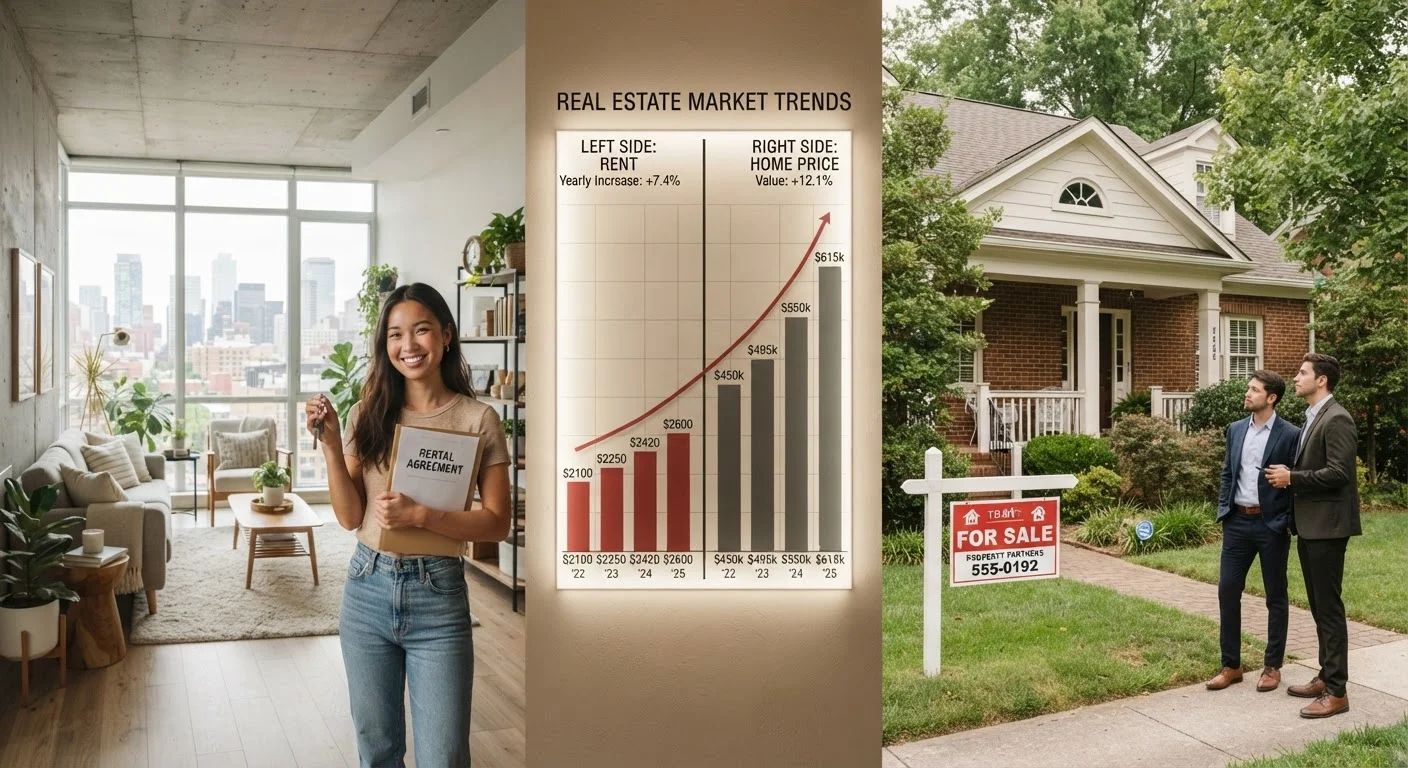
Photo credit: FaqInsider.com
In this article
Neither renting nor buying is universally right in a high-price market. This breakdown helps you think through what matters most for your situation.
Key Takeaways
- Buying at a market peak locks in today's elevated prices and may limit short-term equity growth.
- Renting preserves financial flexibility but exposes you to rising rents and no wealth accumulation.
- Your break-even timeline - typically 5-7 years - is a critical factor when evaluating a purchase.
- Local market conditions, your income stability, and planned duration of stay should drive this decision.
- Neither path is universally superior; both carry real costs and real risks in a hot market.
Lower monthly cash outlay in expensive markets
In high-cost metros, renting an equivalent unit often costs meaningfully less per month than a mortgage payment on a purchased home, freeing capital for savings or investments.
Full flexibility to relocate without transaction friction
Selling a home typically costs 8-10% of the sale price in combined transaction costs. Renters can move at the end of a lease term without absorbing those losses.
Avoids overpaying at a market peak
Buyers who purchase at the top of a cycle may see little or no appreciation for several years, or face paper losses if prices correct - risks renters sidestep entirely.
Down payment capital can be deployed elsewhere
A six-figure down payment left in the market or in other assets continues to compound, offering an opportunity cost argument for renting that is easy to underestimate.
Landlord bears maintenance and repair costs
Homeowners are advised to budget 1-2% of a home's value annually for maintenance. In a high-price market, that figure represents a substantial recurring cost renters avoid.
Rent is not fixed - it can rise sharply
In a hot market, landlords often raise rents aggressively at lease renewal. Renters have limited protection against these increases in most U.S. states, unlike buyers with a fixed-rate mortgage.
No equity accumulation over time
Monthly rent payments build no ownership stake. Over a decade of renting, the cumulative cost can exceed what a buyer would have spent on principal, with nothing to show as an asset.
Less stability and control over your living situation
Landlords can choose not to renew leases, sell properties, or impose conditions renters cannot refuse. Long-term housing security is harder to guarantee as a renter.
Waiting may not produce a better buying opportunity
Markets that appear overheated can remain elevated for years, and a drop in prices is often accompanied by rising mortgage rates that offset the affordability gain.
Miss out on fixed-rate mortgage protection
A fixed-rate mortgage locks in a payment for 15-30 years, shielding the buyer from future housing cost inflation. Renters remain exposed to market-driven rent increases indefinitely.
What a "Hot Market" Actually Means for Your Decision
A hot housing market is generally defined by low inventory, multiple competing offers, homes selling above list price, and rapid price appreciation. For a prospective buyer, these conditions raise the financial stakes considerably. For a renter, they can mean landlords have more pricing power - yet renting in the same market still typically costs far less each month than carrying a mortgage on an equivalent property.
Understanding where prices sit relative to local incomes and historical averages gives a clearer picture than headlines alone. The price-to-rent ratio - which compares the median home sale price to annual rent for a comparable unit - is one tool economists use to gauge whether buying or renting represents better near-term value in a given city. A high ratio suggests renting may be the more cost-efficient short-term choice. A lower ratio tilts toward buying. See how buyer's and seller's markets differ on the ground for context on reading these dynamics in real time.
5-7 years
Typical break-even horizon for buying vs. renting
Real estate analysts generally estimate that buyers need to remain in a home for at least five to seven years to recoup transaction costs and outpace equivalent renting.
8-10%
Approximate transaction cost as share of home price
Combined buying and selling costs - including agent commissions, closing costs, and transfer taxes - often total 8-10% of a home's value, a major factor in break-even calculations.
1-2%
Annual home maintenance as share of home value
Housing financial planners commonly advise homeowners to budget 1-2% of their home's value each year for routine maintenance and repairs.
The Case for Renting When Prices Are Elevated
When home prices are at or near a cyclical peak, renting can be a rational, financially protective choice - not a failure to commit. The flexibility to relocate without the friction of a sale, the ability to invest a down payment in other assets, and the absence of maintenance liability all have real dollar value that standard rent-vs.-buy calculators often undercount.
Lower monthly cash outlay in expensive markets
In high-cost metros, renting an equivalent unit often costs meaningfully less per month than a mortgage payment on a purchased home, freeing capital for savings or investments.
Full flexibility to relocate without transaction friction
Selling a home typically costs 8-10% of the sale price in combined transaction costs. Renters can move at the end of a lease term without absorbing those losses.
Avoids overpaying at a market peak
Buyers who purchase at the top of a cycle may see little or no appreciation for several years, or face paper losses if prices correct - risks renters sidestep entirely.
Down payment capital can be deployed elsewhere
A six-figure down payment left in the market or in other assets continues to compound, offering an opportunity cost argument for renting that is easy to underestimate.
Landlord bears maintenance and repair costs
Homeowners are advised to budget 1-2% of a home's value annually for maintenance. In a high-price market, that figure represents a substantial recurring cost renters avoid.
For a deeper look at how these financial and lifestyle factors interact, explore the full rent-vs.-buy trade-off analysis.
The Case for Buying Even When Prices Are High
Waiting for a market to cool carries its own risks. Mortgage rates may rise while prices stay elevated, erasing any affordability gain from a price correction. Renters who postpone a purchase indefinitely can miss years of equity accumulation and lose the protection of a fixed-rate mortgage payment against future rent inflation.
Rent is not fixed - it can rise sharply
In a hot market, landlords often raise rents aggressively at lease renewal. Renters have limited protection against these increases in most U.S. states, unlike buyers with a fixed-rate mortgage.
No equity accumulation over time
Monthly rent payments build no ownership stake. Over a decade of renting, the cumulative cost can exceed what a buyer would have spent on principal, with nothing to show as an asset.
Less stability and control over your living situation
Landlords can choose not to renew leases, sell properties, or impose conditions renters cannot refuse. Long-term housing security is harder to guarantee as a renter.
Waiting may not produce a better buying opportunity
Markets that appear overheated can remain elevated for years, and a drop in prices is often accompanied by rising mortgage rates that offset the affordability gain.
Miss out on fixed-rate mortgage protection
A fixed-rate mortgage locks in a payment for 15-30 years, shielding the buyer from future housing cost inflation. Renters remain exposed to market-driven rent increases indefinitely.
If you are weighing timing versus readiness, this framework for buying in an uncertain market offers a structured way to think it through without rushing.
Timing the Market Is Rarely Reliable
Predicting the precise peak or trough of a real estate market is notoriously difficult, even for professional economists. Mortgage rates, local employment trends, and housing supply all interact in ways that are hard to forecast. Most housing experts suggest focusing on personal financial readiness and planned tenure rather than trying to time market cycles. If the numbers work for your situation today and you plan to stay, waiting for a better market is not always the lower-risk path.
Running the Numbers: Break-Even and Beyond
The break-even point - the year at which buying becomes cheaper than continuing to rent - is the single most useful calculation for this decision. In a hot market, that timeline typically stretches. Transaction costs alone (agent commissions, closing costs, transfer taxes) can equal 8-10% of a home's purchase price. A buyer who sells within three years in a flat or declining market may lose money even if the home held its value.
Key variables to model include: your all-in monthly cost of ownership (mortgage principal and interest, property taxes, insurance, and maintenance reserves) versus your current rent; the rate at which local rents are rising; your expected investment return on capital you would otherwise use for a down payment; and how sensitive your finances are to a 10-20% price correction after purchase.
A side-by-side financial comparison of renting and buying can help you plug in your own numbers. Also consider whether new construction or existing homes offer better value in your target area when inventory is limited.
This article is for general informational purposes only and does not constitute financial, tax, or legal advice. Consult a licensed financial adviser or real estate professional regarding decisions specific to your circumstances.

Author
Real Estate Editorial Team
Real Estate Editorial Team is the collective byline for our editorial team and contributor network. Articles published under this byline or an editorial pen name are researched, written, and reviewed according to our editorial standards for clarity, consistency, and independence before publication.
View all articles →