
Managing Chronic Conditions While Traveling
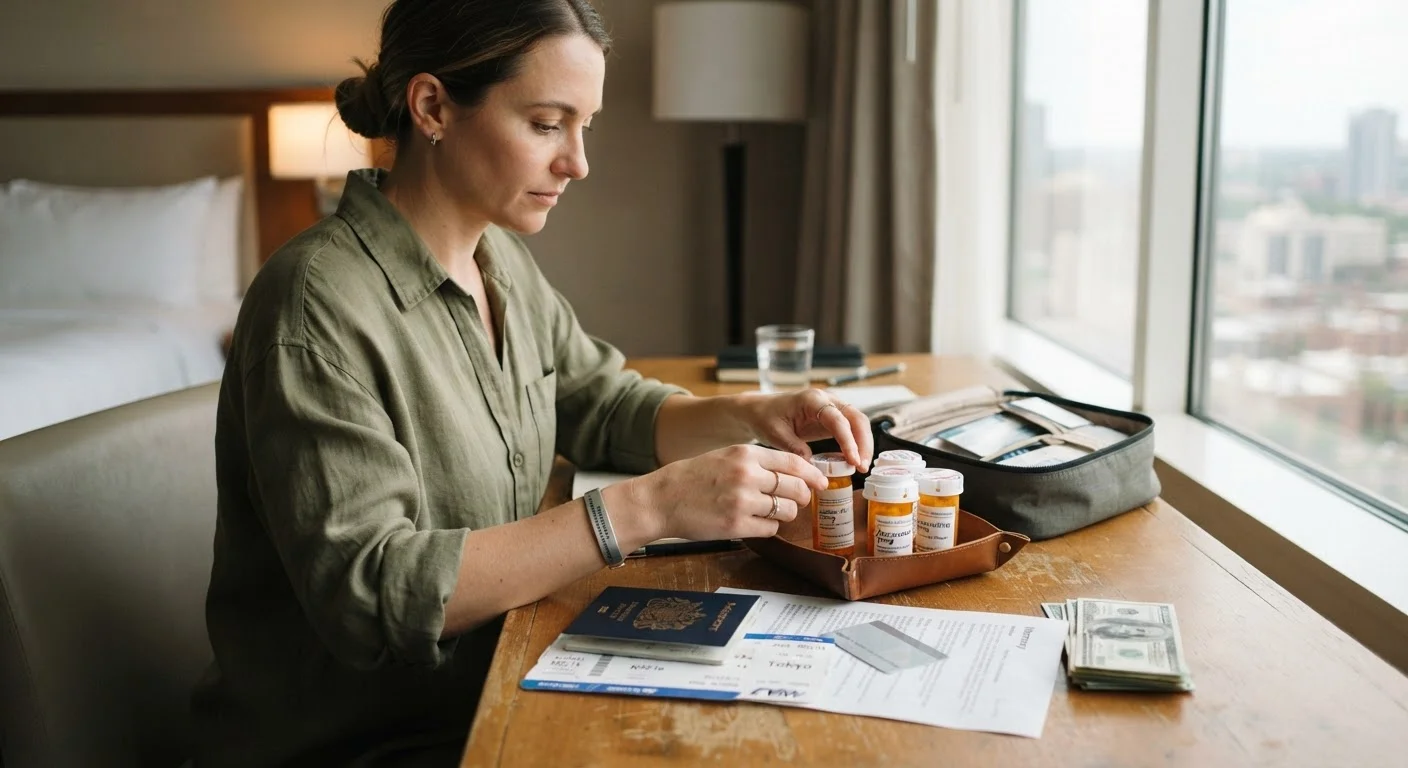
Photo credit: FaqInsider.com
In this article
From medication logistics to climate considerations, here's what travelers managing ongoing health conditions should plan for before and during a trip.
Key Takeaways
- Schedule a pre-travel medical appointment at least 4-6 weeks before departure to review your condition and medications.
- Always carry medications in your carry-on bag, never in checked luggage, to avoid loss or temperature damage.
- Obtain a signed letter from your prescribing doctor listing all medications, diagnoses, and dosages.
- Environmental factors like heat, altitude, and time zones can directly affect how chronic conditions behave.
- Verify travel insurance covers pre-existing conditions - standard policies often exclude them without a waiver.
- Research healthcare access at your destination in advance so you know where to turn if needed.
Start with Your Healthcare Provider - Before You Pack
The most important step in any health-conscious trip isn't what you pack - it's the conversation you have before you start. Scheduling an appointment with your primary care provider or specialist at least four to six weeks before departure gives you time to address prescription refills, adjust dosing schedules if you're crossing time zones, and receive destination-specific advice tailored to your condition.
Bring a concrete itinerary: your destinations, planned activities, climate zones, and rough daily schedule. This context allows your provider to flag risks you might not have considered - for example, whether high-altitude trekking is advisable for someone on certain cardiac medications, or whether extreme heat could affect insulin absorption.
See our pre-trip health preparation timeline for a step-by-step breakdown of how to work backward from your departure date. And if you're coordinating a trip with others who also have different health needs, group travel planning strategies can help everyone's requirements get addressed early.
Ask your provider to write the letter using both brand and generic medication names - generic names travel better across international pharmacy systems if you need an emergency refill.
Brand names vary significantly by country, and pharmacists abroad may not recognize a U.S. trade name, but will often recognize the active compound name.
If you use an insulin pump or other electronic medical device, contact both your device manufacturer and your airline in advance about security screening protocols and carry-on power requirements.
Security screening procedures and in-flight power outlet policies vary and can cause unnecessary stress without advance clarification.
Build a photo backup of all your prescription labels and store it in a cloud folder accessible offline - if your bag is lost, this image can help a local pharmacist or ER understand what you need.
Having visual evidence of your prescriptions speeds up emergency care and pharmacy consultations in unfamiliar settings.
Medication Logistics: Keeping Supplies Safe and on Schedule
Medication management is where many travelers with chronic conditions feel the most anxiety - and where preparation pays off most visibly. The foundational rule: always keep medications in your carry-on, never in checked luggage. Bags get lost, cargo holds aren't climate-controlled, and you should never be separated from a time-sensitive medicine.
When traveling internationally, research whether your medications are legal at your destination. Some controlled substances that are routine in the U.S. require advance paperwork or are outright prohibited in other countries. The U.S. Embassy website for your destination is a reliable starting point, and your provider can help you obtain any required documentation.
- Bring extra supply: Pack at least a week's worth beyond your planned stay to buffer for delays or loss.
- Keep original packaging: Labeled containers help at customs and emergency rooms abroad.
- Account for time zones: Ask your provider how to adjust dosing windows if you're crossing multiple time zones.
- Temperature-sensitive medications: If your medication requires refrigeration (such as some biologics or insulin), research TSA rules for travel packs and confirm hotel refrigeration in advance.
For a broader look at what else to keep accessible mid-journey, see what to keep in your carry-on for health emergencies.
Climate, Altitude, and Environment: How They Affect Your Condition
Destination environments don't just affect comfort - they can directly interact with chronic conditions in ways that catch travelers off guard. Understanding these dynamics before you arrive can help you prepare meaningful contingencies.
Heat and humidity can accelerate dehydration, which matters significantly for people managing kidney conditions, cardiovascular disease, or diabetes. Some medications also become less effective or harder to tolerate in extreme heat. For a deeper look at heat-related health risks, see protecting your health in warm-weather destinations.
High altitude reduces available oxygen and can exacerbate respiratory and cardiac conditions, and may interact with certain medications. Even travelers without pre-existing conditions experience acute mountain sickness - so those with chronic conditions should treat altitude planning as non-optional. Learn more in our guide on recognizing altitude sickness symptoms.
Jet lag and disrupted sleep can destabilize conditions that depend on consistent routine, including autoimmune disorders, epilepsy, and mood-related diagnoses. For practical adjustment strategies, see managing your body across environments.
Documentation and Emergency Preparedness
A medical summary letter - signed and dated by your provider - is one of the most underrated travel documents a chronic condition traveler can carry. It should list your diagnoses, current medications with generic names and dosages, known allergies, and your provider's contact information. Keep a printed copy with your passport and a digital version saved offline on your phone.
Additional documentation to consider:
- Medical alert identification: A bracelet or card that communicates your condition quickly if you're unable to speak for yourself.
- Emergency contacts: A written list that includes your provider, a trusted family contact, and your travel insurance emergency line.
- Condition-specific action plan: If your condition involves episodic crises (asthma attacks, hypoglycemic events, seizures), have a one-page protocol your travel companions can follow.
Never Assume Your Medication Is Legal Abroad
Medications that are legally prescribed in the U.S. - including some stimulants, opioids, and benzodiazepines - are controlled or prohibited substances in several countries. Carrying them across certain borders without proper documentation can result in serious legal consequences. Always verify the rules for each country you are entering, including transit countries, through the relevant embassy or consulate well before your trip.
Knowing the local emergency number at your destination is essential - 911 doesn't work in most countries. Research the equivalent number and the nearest hospital with English-speaking staff before you arrive.
Travel Insurance and Accessing Care Abroad
Standard travel insurance policies frequently exclude pre-existing conditions unless you purchase a waiver - often called a "pre-existing condition waiver" - typically within a specific window after booking. Read policy language carefully before purchasing, and ask explicitly whether your condition, your medications, and potential complications are covered.
What to look for in a policy:
- Medical evacuation coverage (can be costly without it)
- Coverage for emergency hospitalization related to your condition
- A 24-hour assistance line with medical support staff
- Clarity on what documentation they require for claims
For context on what you might encounter if you need care, how healthcare systems differ around the world offers a useful orientation. Coverage and quality vary enormously - knowing what to expect reduces panic in stressful moments.
This article provides general educational information and is not a substitute for personalized medical or insurance advice. Always consult your healthcare provider and a licensed insurance professional before traveling with a chronic health condition.
Day-to-Day Management During Your Trip
Even with excellent preparation, the rhythm of travel - irregular meals, disrupted sleep, physical demands - can challenge even well-managed conditions. Building flexible structure into your itinerary is the practical answer.
Practical day-to-day strategies include setting phone alarms tied to local time for medication schedules, identifying grocery stores or pharmacies near your accommodation for condition-appropriate foods or backup supplies, and building in rest days, especially after long travel days or high-activity excursions.
If you're managing conditions affected by stress, check in with yourself regularly. travel stress is more common than many people admit, and acknowledging when you need to slow down is a smart travel decision, not a compromise.
Finally, good general trip planning habits reduce cognitive load overall, leaving more bandwidth for health self-management. Our guide to trip-planning habits that hold up across any destination covers logistics strategies that reduce surprises regardless of where you're headed.

Author
Travel Editorial Team
Travel Editorial Team is the collective byline for our editorial team and contributor network. Articles published under this byline or an editorial pen name are researched, written, and reviewed according to our editorial standards for clarity, consistency, and independence before publication.
View all articles →