
Everything to Prepare Before an International Trip
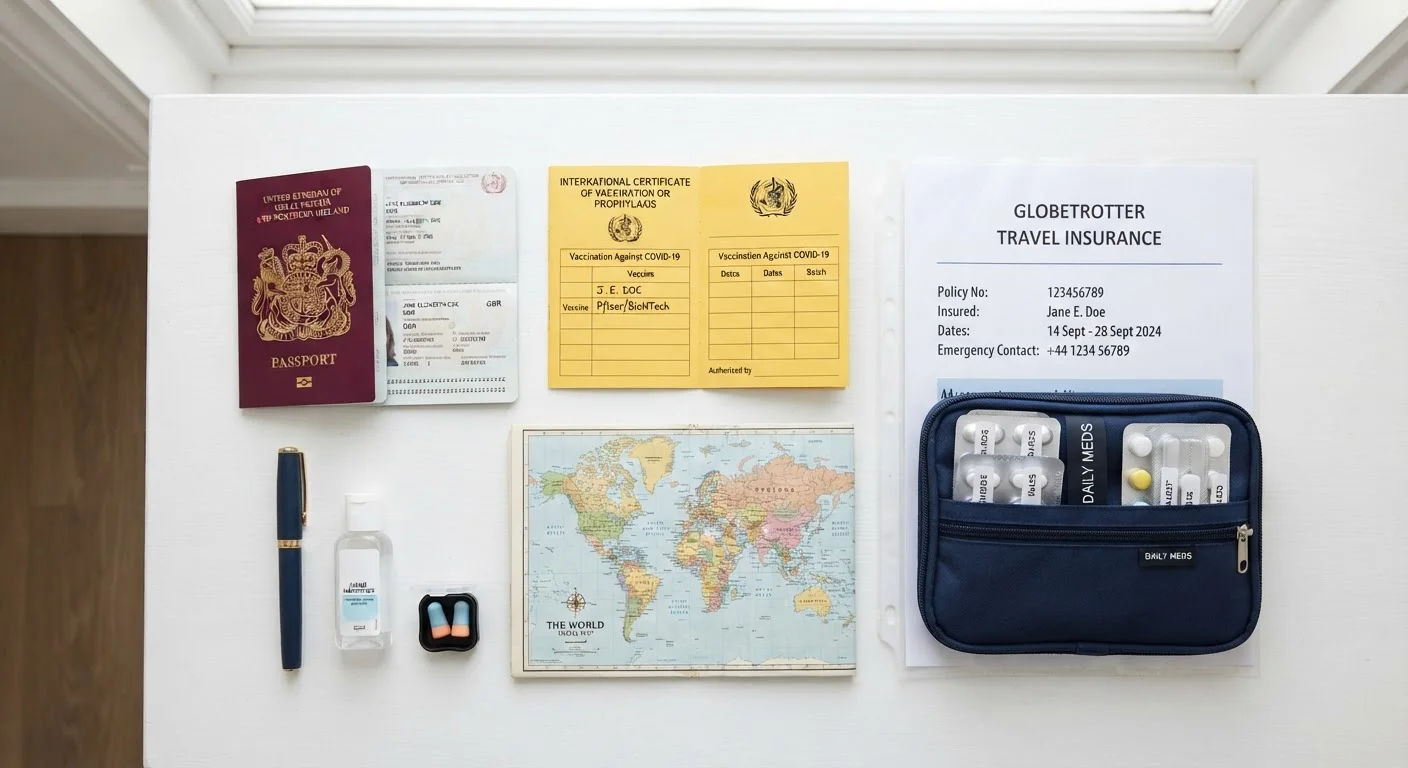
Photo credit: FaqInsider.com
In this article
A comprehensive pre-departure reference covering vaccinations, insurance, documentation, medications, emergency contacts, and destination research.
Key Takeaways
- Start health and document prep at least 6-8 weeks before departure for international trips.
- Verify passport validity, visa requirements, and entry rules directly with official government sources.
- Travel health consultations should happen well in advance since some vaccines require multiple doses.
- Travel insurance should cover medical evacuation, not just trip cancellation.
- Store digital and physical copies of all critical documents in separate locations.
- Register with the U.S. State Department's STEP program for safety alerts abroad.
Documents: Your First Line of Defense
Before anything else gets sorted, your documentation needs to be airtight. Check your passport's expiration date first - many countries require at least six months of validity beyond your travel dates, and some require more. Renewing a passport can take weeks even with expedited processing, so don't leave this until the last minute.
Visa requirements vary enormously by destination and your citizenship. The U.S. Department of State's country information pages and the destination country's official embassy website are the authoritative sources - verify both, since rules change. Some countries offer visa-on-arrival or e-visa options, while others require applications well in advance.
Make digital copies of your passport, visa, travel insurance policy, and any other critical documents. Store copies in a secure cloud account and email them to yourself. Leave a physical copy with a trusted contact at home. For a structured walkthrough of everything you'll need, see our pre-departure checklist.
When photocopying documents, include the back of your passport's photo page and the visa stamp page - customs officials sometimes ask for both.
Having complete copies reduces delays and confusion at border crossings, particularly if your passport is ever lost or stolen abroad.
Set a calendar reminder 90 days before departure specifically to check passport expiry and start visa applications - bureaucratic processing times can easily consume 4-6 weeks.
The most common fixable pre-trip crisis is a passport that's too close to expiration, and it's entirely avoidable with early action.
Vaccinations and Health Preparation
Health prep for international travel isn't just about avoiding inconvenience - some destinations carry genuine disease risks that require advance immunization. Schedule a travel health consultation with a physician or a travel medicine clinic at least 6-8 weeks before departure. Some vaccines, like typhoid or hepatitis A and B series, require multiple doses spaced weeks apart.
Required vaccinations (such as yellow fever for certain African and South American countries) may be a legal entry condition - not just a recommendation. Proof of vaccination on an official International Certificate of Vaccination or Prophylaxis (ICVP), often called a yellow card, may be required at the border.
The U.S. Centers for Disease Control and Prevention (CDC) maintains destination-specific travel health recommendations at CDC.gov, which is an excellent starting point to bring to your health consultation. Remember: this article provides general information, not medical advice. Always consult a qualified healthcare professional about your specific health needs before travel.
6-8 weeks
Recommended lead time for travel health consultation
The CDC advises travelers to see a travel medicine provider at least 4-6 weeks before departure, with more time needed for multi-dose vaccine series.
$50,000+
Potential cost of international medical evacuation
Medical evacuation costs vary widely by location and circumstance; the U.S. State Department notes they can reach or exceed this figure for remote destinations.
6 months
Passport validity required by many countries
Many countries require a traveler's passport to be valid for at least six months beyond the planned departure date as an entry condition.
Travel Insurance Essentials
Travel insurance is one of the most misunderstood pre-trip investments. Many travelers assume a basic policy covers everything - but trip cancellation coverage and medical evacuation coverage are very different things. Medical evacuation alone can cost tens of thousands of dollars if you need emergency transport from a remote destination, and standard domestic health insurance plans often provide minimal or no coverage abroad.
When evaluating policies, look for: emergency medical expense coverage, medical evacuation and repatriation, trip interruption, and 24-hour assistance services. Read the exclusions carefully - pre-existing conditions, adventure activities, and travel to destinations under government advisories are commonly excluded.
For guidance on keeping your overall finances organized before you go, our pre-trip financial checklist covers currency, card fees, and emergency funds in detail. Content here is general educational information, not personalized financial or insurance advice - review policy terms carefully and consult a licensed professional if needed.
Medications and Personal Health Kit
If you take prescription medications, pack more than enough for your trip plus several extra days in case of delays. Keep medications in their original, labeled containers and carry them in your carry-on luggage - never in checked bags that could be lost. Some medications are restricted or controlled in certain countries; check with the destination country's embassy or official government health authority before traveling.
A personal health travel kit typically includes: an over-the-counter pain reliever and fever reducer, antidiarrheal medication, antihistamines, a basic first-aid kit, sunscreen, insect repellent (particularly important in malaria or dengue-risk areas), and any destination-specific items your travel health provider recommends. Altitude sickness prevention, water purification tablets, or antimalarial medications may be relevant depending on where you're headed - these require a prescription and clinical guidance.
This article is for informational purposes only and is not medical advice. Consult a qualified healthcare professional for guidance specific to your health situation before international travel.
Emergency Contacts and Communication
Compile an emergency contact list before you leave and share it with someone at home. It should include: the local U.S. embassy or consulate number in your destination country, your travel insurance provider's 24-hour emergency line, your accommodation's address and phone number, and a trusted contact back home who knows your itinerary.
Enroll in the U.S. State Department's Smart Traveler Enrollment Program (STEP) at step.state.gov - it's free, takes minutes, and allows the embassy to reach you in a genuine emergency or natural disaster. For more on handling extreme scenarios abroad, see our guide on preparing for natural disasters and extreme weather.
On the communication side, confirm whether your cell plan includes international coverage or research an affordable local SIM option. Download offline maps for your destination - they work without data and can be a lifesaver in areas with poor connectivity.
Destination Research and Safety Awareness
Understanding your destination before you arrive goes well beyond reading about top attractions. Check the U.S. State Department's travel advisories (travel.state.gov) for your destination - these are categorized from Level 1 (Exercise Normal Precautions) to Level 4 (Do Not Travel) and are updated regularly. Be aware of local laws, particularly anything that differs sharply from U.S. norms, including laws around photography, alcohol, dress codes, or medication possession.
Research the local currency and whether credit cards are widely accepted or cash is preferred. Note the location of hospitals or clinics near your accommodations and the local emergency services number - it's not always 911. Understanding cultural norms and basic phrases in the local language demonstrates respect and can make navigating unexpected situations much smoother.
For a comprehensive foundation covering every phase of international trip planning, explore our international trip planning guide, and browse the full Trip Planning hub for related resources. Solid preparation isn't about expecting the worst - it's about giving yourself the freedom to fully enjoy wherever you go.

Author
Travel Editorial Team
Travel Editorial Team is the collective byline for our editorial team and contributor network. Articles published under this byline or an editorial pen name are researched, written, and reviewed according to our editorial standards for clarity, consistency, and independence before publication.
View all articles →