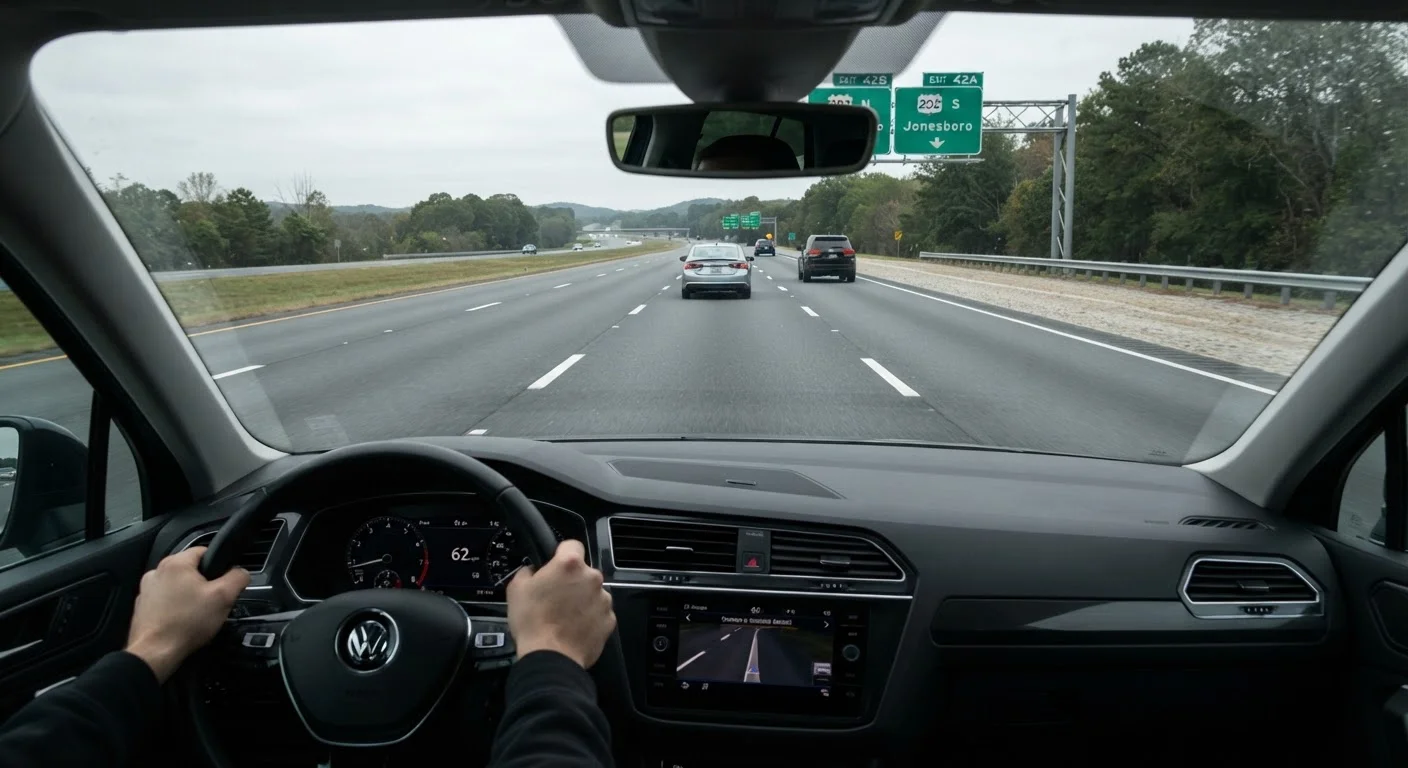
Speed Limits, Speed Choice, and the Gap Between Them
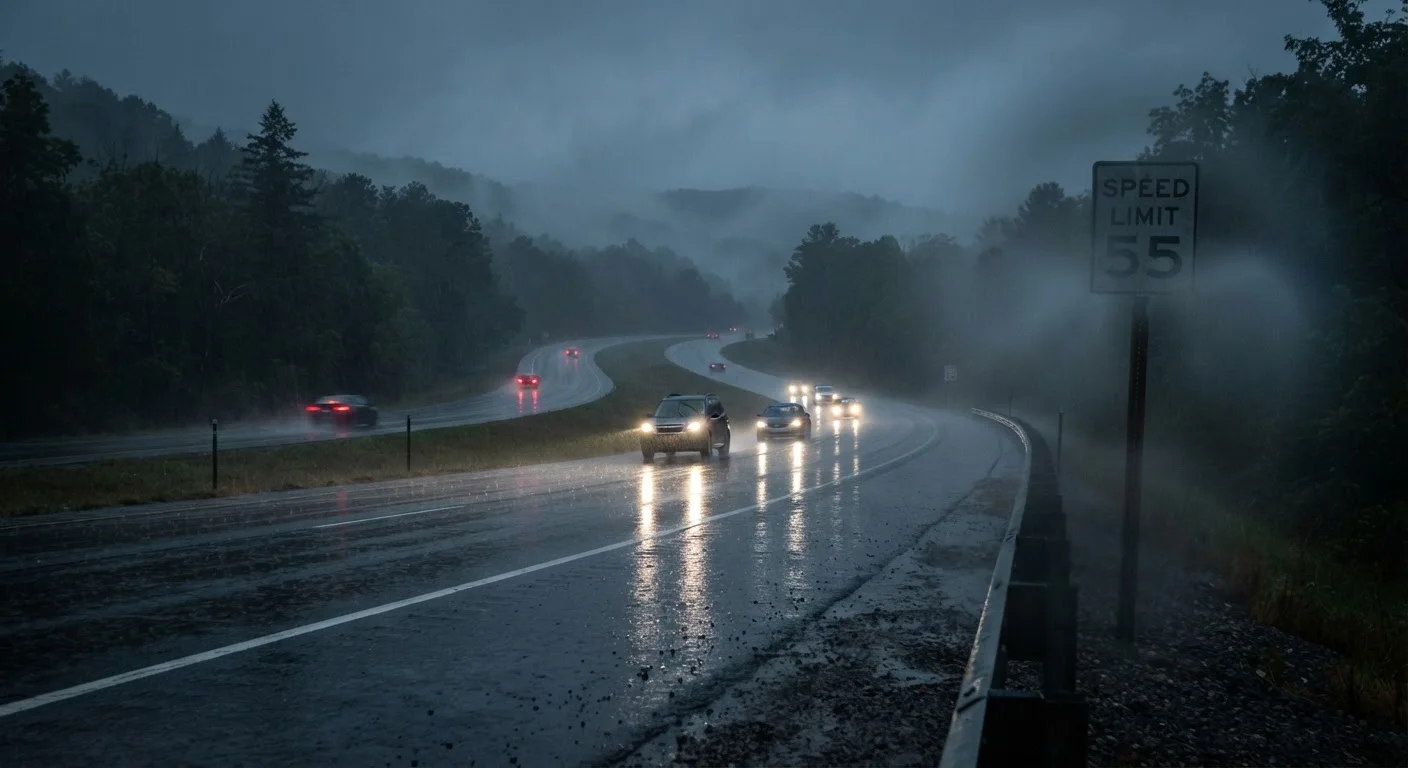
Photo credit: FaqInsider.com
In this article
Posted speed limits reflect ideal conditions. What does appropriate speed actually mean in rain, fog, heavy traffic, or road construction?
Key Takeaways
- Posted speed limits are maximums for ideal conditions, not targets for all situations.
- Rain, fog, construction zones, and heavy traffic each require independent speed adjustments.
- Most U.S. states have a 'reasonable and prudent' standard that applies regardless of the posted limit.
- Stopping distance increases dramatically with speed, especially on wet or compromised surfaces.
- Matching the flow of traffic reduces crash risk, but only when that flow is itself appropriate for conditions.
- Speed choice and following distance are closely linked safety factors - one affects the other.
What Speed Limits Actually Represent
Speed limits in the United States are set through a combination of engineering studies, traffic surveys, and state regulation. The standard method - used by many transportation departments - involves measuring the speed at which 85% of drivers naturally travel on a given road under clear, dry, unobstructed conditions. That benchmark helps set a limit that reflects realistic driver behavior on roads designed to handle it.
What this means in practice: the posted number assumes favorable conditions. It does not account for rain-reduced visibility, frost on a shaded overpass, a lane closure three miles ahead, or a child stepping off a school bus. The sign on the pole is a ceiling, not a floor - and not a recommendation for all weather.
The '85th Percentile' Rule Has Limitations
The 85th percentile method for setting speed limits is widely used but also widely debated. Critics note that it can perpetuate unsafe speeds on roads where driver behavior itself is already too fast. Some transportation researchers advocate for setting limits based on road design, land use, and pedestrian presence rather than observed traffic speeds alone. Regardless of how limits are set, the driver's obligation to adjust for conditions remains constant.
The Physics Behind Speed Choice
Stopping distance is the clearest argument for adjusting speed independently of posted limits. It has two components: reaction distance (the distance your vehicle travels while your brain processes a hazard and your foot moves to the brake) and braking distance (the distance traveled once braking begins). Both grow with speed, but braking distance grows with the square of speed - meaning a modest increase in velocity creates a disproportionately larger stopping requirement.
On wet pavement, tire traction is substantially reduced, extending braking distance further. On roads with loose gravel, uneven surfaces, or fresh oil-and-chip sealing, the effect is compounded. This is why adjusting speed for surface conditions is not merely cautious advice - it is grounded in the physical limits of what your vehicle can do.
~4x
Increase in braking distance when speed doubles
Because braking distance scales with the square of speed, doubling from 30 to 60 mph roughly quadruples the distance needed to stop - a core principle in traffic engineering and driver safety education.
35 mph
Speed at which hydroplaning can begin
According to traffic safety research, hydroplaning on wet roads can occur at speeds as low as 35 mph when tires are worn or water depth is sufficient - well below highway speed limits.
2x
Typical fine increase in active work zones
Most U.S. states mandate doubled fines for speeding violations in active highway construction zones, reflecting the elevated risk to workers and drivers in those environments.
Conditions That Demand a Speed Reduction
Rain and wet roads. Hydroplaning - where a layer of water separates tires from pavement - can occur at speeds as low as 35 mph with worn tires. Even without hydroplaning, wet roads significantly lengthen stopping distance.
Fog and reduced visibility. Safe speed in fog is the speed at which you can stop within the distance you can clearly see. If your headlights illuminate 150 feet ahead and your stopping distance at your current speed is 200 feet, you are overdriving your visibility - a well-documented crash pattern.
Work zones. Lane widths narrow, workers are present, traffic patterns shift without warning, and pavement transitions are abrupt. Most states impose doubled fines in active work zones for exactly these reasons.
Heavy traffic and stop-and-go conditions. Speed choice in dense traffic is inseparable from following distance. As following distance research consistently shows, rear-end collisions spike precisely when drivers maintain highway-speed habits in compressed traffic. Slowing down buys the reaction time that tailgating eliminates.
Matching Traffic Flow - and Its Limits
Drivers are often advised to match the flow of surrounding traffic, and there is real safety logic behind it: large speed differentials between vehicles on the same road create crash risk. A driver going 20 mph below highway traffic can be as dangerous as one going 20 mph above it.
However, matching flow has limits. If surrounding traffic is moving unsafely fast for the conditions - a common occurrence in the early minutes of a sudden downpour - following the crowd is not inherently safer. Drivers who reduce speed appropriately while others have not should increase their awareness of what is happening behind them and use hazard lights if visibility is severely limited.
Speed choice is also connected to what you can see and anticipate. Faster speeds shrink the time window in which you can detect and respond to hazards in adjacent lanes or at the edges of your visual field.
Adjust Early, Not at the Last Moment
When you see conditions ahead deteriorating - a rain squall, merge warning signs, a fog bank - reduce speed gradually before you are inside the hazard zone. Hard braking during a lane change or on a slick surface is far more dangerous than a smooth, early adjustment made with space to spare.
Building a Practical Habit
The gap between posted limit and appropriate speed is not a legal gray area to be exploited - it is a safety buffer built into the system. Developing the habit of consciously evaluating conditions before committing to a speed takes practice but becomes second nature.
A useful mental checklist at the start of any drive and whenever conditions change: How is the road surface? What is my visibility distance? How dense is surrounding traffic? Am I in a zone with pedestrians, cyclists, or school zones? The posted limit tells you the legal maximum - your answers to these questions tell you what is actually appropriate.
For drivers looking to develop more complete situational awareness, understanding crash-prone environments like intersections offers a complementary perspective on where and why speed-related judgment matters most.
This article is intended for general educational purposes. Always follow the traffic laws applicable in your state and jurisdiction.
Frequently Asked Questions

Author
Cars Editorial Team
Cars Editorial Team is the collective byline for our editorial team and contributor network. Articles published under this byline or an editorial pen name are researched, written, and reviewed according to our editorial standards for clarity, consistency, and independence before publication.
View all articles →