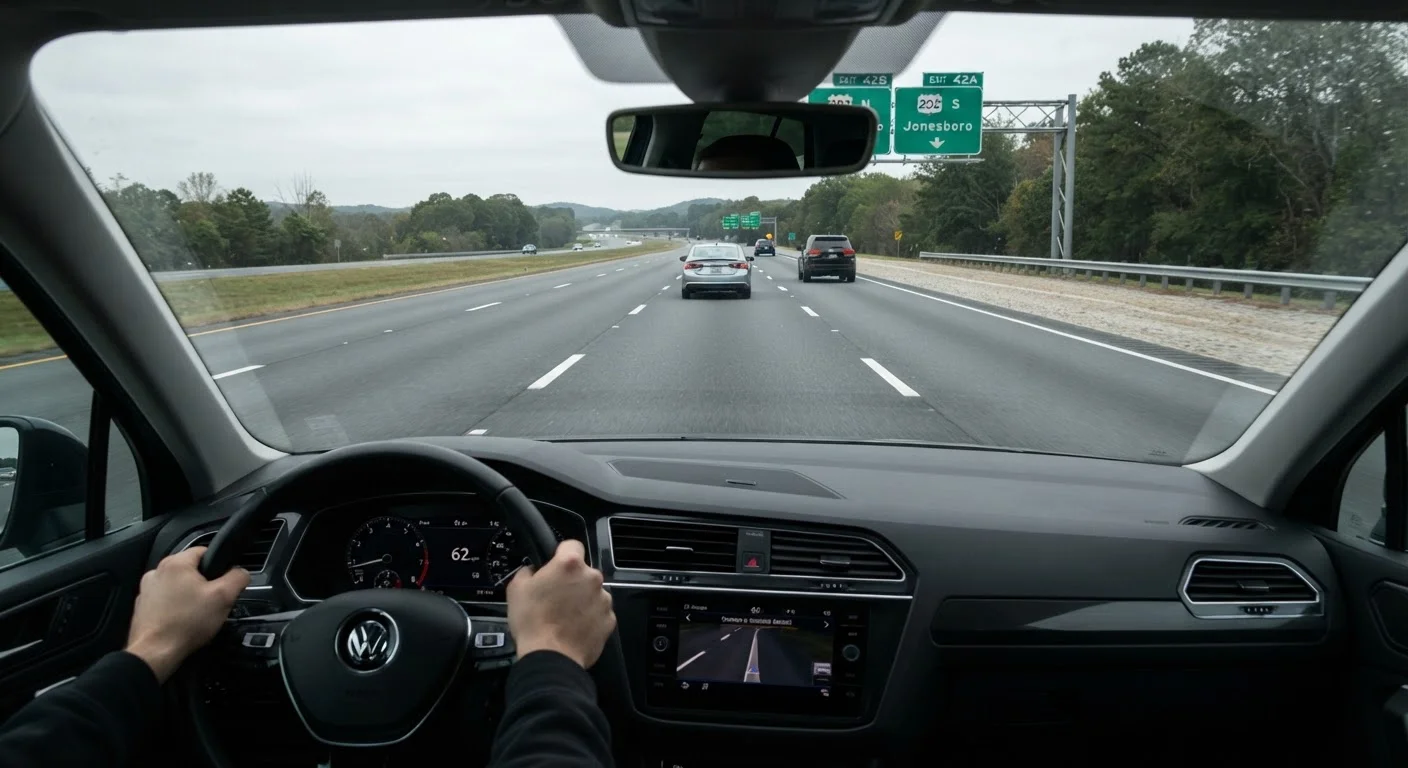
The Science Behind Reaction Time and Why Roads Demand More of It Than You Think
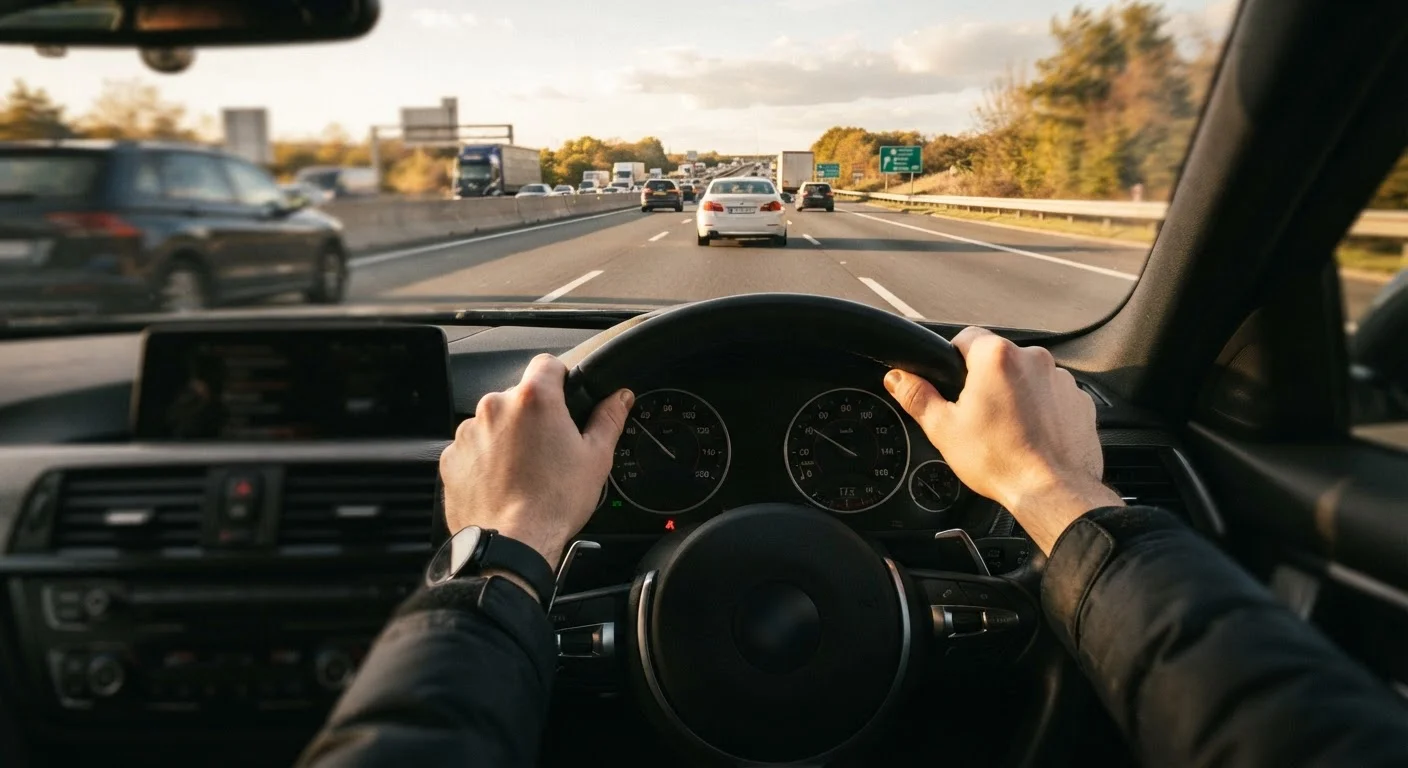
Photo credit: FaqInsider.com
In this article
From perception to braking, your reaction time shapes every close call on the road. Here's what the research says and what affects it most.
Key Takeaways
- Reaction time is a multi-step chain, not a single instant - perception, cognition, and physical response all contribute.
- At 60 mph, a 1.5-second reaction time means your car travels roughly 132 feet before braking begins.
- Fatigue, distraction, alcohol, and age are among the most significant factors that slow reaction time.
- No driver can reliably self-assess when their reaction time is impaired - awareness alone is not a safeguard.
- Maintaining adequate following distance is the most direct way to compensate for reaction time limits.
- Scanning the road well ahead gives your brain extra processing time before a hazard becomes critical.
The Three-Stage Chain Between Hazard and Brake
Most drivers think of reacting as a single event - you see something, you stop. In reality, neuroscience breaks driver response into at least three distinct stages, each consuming precious time.
Perception: Your eyes must first detect the hazard. This depends on visibility, where you're looking, and whether your visual system is fatigued or distracted. A hazard you aren't looking at cannot be perceived.
Cognitive processing: Your brain must identify what it sees as a threat, assess severity, and select a response. This stage is where complexity slows you down - an ambiguous situation (is that car stopping or just slowing?) takes longer to process than a clear one.
Physical execution: Your muscles must move your foot from accelerator to brake and apply pressure. This stage is fastest but still takes measurable time - and in older drivers or those with certain medical conditions, it can be meaningfully slower.
After all three stages, your vehicle still needs additional distance to actually decelerate. Researchers call the total of perception-reaction time plus braking distance the total stopping distance - and at highway speeds, it can exceed the length of a football field.
~132 ft
Distance traveled before braking at 60 mph
Based on a standard 1.5-second perception-reaction time estimate used in traffic engineering calculations.
1.5 sec
Typical perception-reaction time for alert drivers
Commonly cited in transportation safety research and traffic engineering standards as a baseline for unimpaired, attentive drivers.
~0.05 BAC
Impairment equivalence after 18 hrs without sleep
Research on sleep deprivation and driving performance has drawn this comparison to highlight fatigue as a serious impairment factor.
What Slows Reaction Time - And by How Much
Several well-documented factors stretch each stage of the reaction chain. Understanding them helps explain why the same driver can perform very differently on different days.
Distraction
Cognitive distraction - being mentally engaged with something other than driving - delays hazard detection even when eyes are nominally on the road. A landmark study by the AAA Foundation for Traffic Safety found that voice-based tasks create measurable mental distraction lasting several seconds after the task ends. Glancing at a phone, meanwhile, removes visual input entirely. For high-risk zones like intersections, even brief distraction can be catastrophic.
Fatigue
Sleep deprivation degrades reaction time progressively. Research published in transportation safety literature has demonstrated that moderate sleep restriction across several nights can impair performance as severely as acute total sleep deprivation - without drivers recognizing their own impairment.
Alcohol and impairing substances
Alcohol slows neural signal transmission, increases processing time, and degrades the judgment needed to recognize hazards early. Even blood-alcohol levels below legal limits in most states have been shown to increase reaction time in controlled studies.
Age and physical condition
Simple reaction time changes modestly with age, but complex reaction time - involving multiple choices - slows more noticeably. Vision changes that accompany aging, such as reduced contrast sensitivity, can also delay the perception stage.
Build Time Into Your Drive, Not Just Space
Following distance is the most direct buffer against reaction time limits, but it works only if you're also scanning ahead. A four-second gap behind the car in front gives you little protection if you don't notice brake lights until the last moment. Combine adequate spacing with active forward scanning - looking well beyond the vehicle directly ahead - so your perception stage begins as early as possible.
Speed Multiplies Every Millisecond
The relationship between speed and stopping distance is not linear - it's exponential when braking physics are included. While reaction time itself stays roughly constant, the distance covered during that reaction window grows directly with speed. Once brakes engage, stopping distance increases with the square of speed under identical road conditions.
Consider a driver with a 1.5-second perception-reaction time:
- At 30 mph: approximately 66 feet traveled before braking begins
- At 45 mph: approximately 99 feet
- At 60 mph: approximately 132 feet
- At 75 mph: approximately 165 feet
Add braking distance on top, and the gap between reacting and stopping grows quickly. This is why following distance matters more than many drivers recognize - it is, in effect, borrowed reaction time. The same principle applies in adverse conditions: wet pavement, worn tires, or cold temperatures all extend braking distance, requiring even more buffer space.
For a deeper look at how anticipating hazards before they materialize can reduce the burden on raw reaction time, see our guide to defensive driving techniques.
Practical Habits That Work With Your Biology
You cannot meaningfully speed up your nervous system through willpower. What you can do is engineer your driving environment so that reaction time limits matter less.
Scan far ahead
Experienced drivers habitually look 12-15 seconds ahead rather than fixating on the car immediately in front. This gives the perception and processing stages more lead time, so that by the time a hazard is near, a response is already forming. Night driving compounds this challenge - see our article on managing night driving hazards for specific strategies.
Reduce in-cabin cognitive load
Limit conversations, especially complex or emotional ones, when driving in demanding conditions. Research suggests that even passengers instinctively reduce conversation when traffic demands more attention - a behavior that hands-free phone callers cannot rely on from a remote party.
Prioritize sleep before long drives
A well-rested driver is not simply more comfortable - they are measurably faster to respond. Treating sleep as a driving safety input, not just a comfort preference, reflects what the research consistently shows.
Reassess assumptions about your own limits
Studies repeatedly show that impaired drivers underestimate their impairment. Common beliefs about reaction time don't always survive contact with research - several widely held driving assumptions have been tested and found wanting.
This article is for general educational purposes only and does not constitute professional safety or legal advice. Always consult qualified professionals and follow applicable laws and regulations for your jurisdiction.
Frequently Asked Questions

Author
Cars Editorial Team
Cars Editorial Team is the collective byline for our editorial team and contributor network. Articles published under this byline or an editorial pen name are researched, written, and reviewed according to our editorial standards for clarity, consistency, and independence before publication.
View all articles →