
Companion Planting Combinations That Actually Work
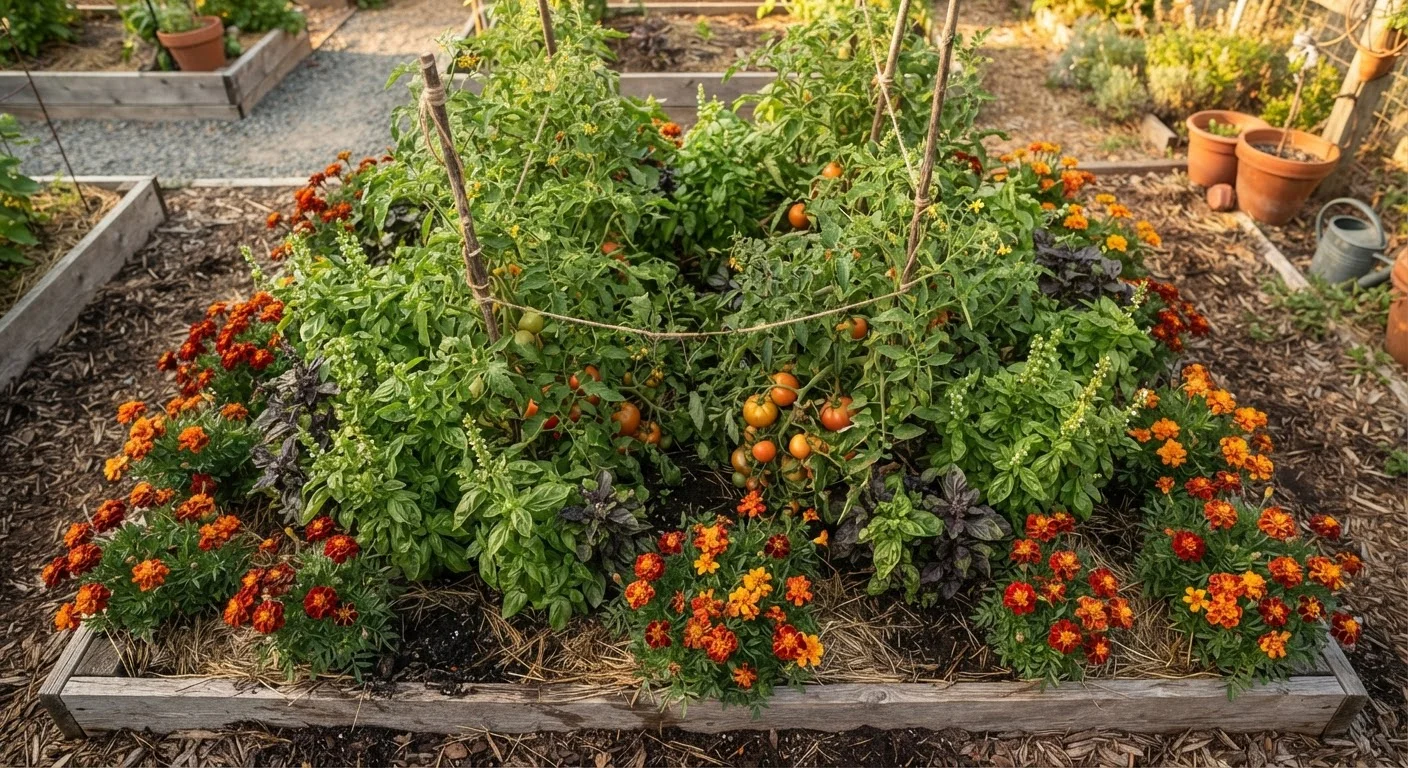
Photo credit: FaqInsider.com
A curated look at well-established companion planting pairings — what the science and tradition say about tomatoes, basil, marigolds, and more.
Key Takeaways
- Companion planting uses plant relationships to improve pest control, pollination, and soil health.
- The 'Three Sisters' combination of corn, beans, and squash is one of the most time-tested pairings in gardening history.
- Marigolds are among the most research-supported companion plants, reducing harmful nematode populations in soil.
- Not all popular pairings have strong scientific backing - understanding the 'why' helps you choose wisely.
- Even container gardeners can benefit from companion planting by pairing compatible herbs and vegetables in the same pot.
Why Companion Planting Is Worth Your Attention
Companion planting is the practice of growing different plant species in close proximity so that each benefits the other - or at least doesn't interfere. It draws from both long agricultural tradition and an evolving body of horticultural research. Some pairings repel insects, others fix nitrogen in the soil, and a few simply make efficient use of limited space.
The honest truth is that the evidence varies by combination. Some pairings have solid scientific support; others rest mostly on gardeners' observations passed down over generations. That doesn't make tradition worthless - experienced gardeners have noticed real patterns - but it's worth knowing which pairings have more backing than others. If you're just getting started, see our beginner's guide to vegetable gardening before deciding how to lay out your beds.
Below are seven companion planting combinations that have a meaningful track record - either in controlled studies, in widespread agricultural practice, or both.
Tomatoes and Basil
This is probably the most famous companion planting pairing, and it holds up reasonably well. Basil emits volatile compounds that some research suggests may repel aphids and thrips - common tomato pests. The evidence is modest but directionally consistent across several small studies. Beyond pest deterrence, the two plants share compatible water and sunlight needs, making them easy to manage side by side.
Plant basil about 12 to 18 inches from tomato stems. Pinch basil flowers regularly to keep the plant productive and aromatic - that aromatic output is where much of its pest-deterring potential is thought to come from.
Basil's aromatic compounds may help deter aphids and thrips from nearby tomato plants.
Corn, Beans, and Squash (The Three Sisters)
Developed by Indigenous farmers in North America over centuries, the Three Sisters is one of the most well-documented polyculture systems in the world. Corn provides a vertical structure for beans to climb. Beans fix atmospheric nitrogen into the soil, feeding the heavy-feeding corn and squash. Squash spreads wide, shading the soil to retain moisture and suppress weeds.
This combination is as much about space efficiency and soil health as it is about pest control. It requires a decent amount of room to work properly - at minimum a 10-by-10-foot plot - but the yield and soil benefits are well-established through both agricultural research and generations of practice.
The Three Sisters system combines structure, nitrogen-fixing, and ground cover in one efficient planting.
Marigolds and Vegetable Beds
Marigolds, particularly Tagetes patula (French marigolds), are among the most research-backed companion plants available to home gardeners. Studies have shown that their roots release a compound called alpha-terthienyl, which suppresses certain soil-dwelling nematodes - microscopic worms that attack vegetable roots. For this effect, marigolds need to be grown densely and for a full season, not just tucked in as an afterthought.
They also attract beneficial insects, including predatory wasps and hoverflies, which feed on common garden pests. Plant them as a border around tomato, pepper, or squash beds for best results.
French marigolds release root compounds that actively suppress harmful soil nematodes when planted densely.
Carrots and Onions
This pairing addresses two specific insects: the carrot fly and the onion fly. Each pest is reportedly confused or deterred by the scent of the other plant. While controlled studies are limited, the logic is grounded in the documented behavior of these pests, and the pairing is consistently recommended in horticultural literature.
Interplant rows of carrots and onions alternately rather than planting them in large separate blocks. The intermingling of scents is what's thought to create the masking effect. Keep in mind this is pest mitigation, not elimination - you may still see some pest pressure.
Interplanted carrots and onions may confuse the pests that target each, reducing overall damage.
Beans and Brassicas
Nitrogen-fixing beans can improve soil fertility for neighboring brassicas - a plant family that includes cabbage, broccoli, kale, and Brussels sprouts. Brassicas are moderate to heavy nitrogen feeders, so planting beans nearby or in rotation with them makes practical sense from a soil nutrition standpoint.
Avoid planting onions or garlic near beans, as those alliums are thought to inhibit bean growth. Stick with brassicas as the companion here, and consider rotating beans through brassica beds in subsequent seasons to build soil nitrogen over time.
Beans fix nitrogen that directly benefits nearby heavy-feeding brassica crops like broccoli and kale.
Nasturtiums as Trap Crops
Nasturtiums are used less as a mutual benefit pairing and more as a deliberate sacrifice crop - often called a trap crop. Aphids are strongly attracted to nasturtiums, which can draw them away from more valuable vegetables like beans, cucumbers, and squash. Once aphid colonies establish on nasturtiums, you can remove and dispose of affected plants or leaves.
This approach requires some vigilance. If aphid populations on nasturtiums get too large before you intervene, they may spread anyway. Used proactively, though, nasturtiums can meaningfully reduce aphid pressure on surrounding crops.
Nasturtiums act as a trap crop, luring aphids away from vegetables and concentrating them for easy removal.
Dill and Brassicas (With a Caveat)
Dill attracts beneficial insects - particularly parasitic wasps and lacewings - that prey on caterpillars and other pests that commonly attack brassicas. Planting dill near cabbage, broccoli, or kale can support a natural pest control ecosystem in that part of your garden.
The important caveat: keep dill away from carrots, as the two plants can cross-pollinate and negatively affect each other's flavor and seed quality. Also, mature dill can inhibit the growth of nearby plants, so give it some breathing room and harvest it actively to prevent it from bolting and dominating the bed.
Dill near brassicas draws parasitic wasps and lacewings that naturally control caterpillar pests.
Putting These Pairings Into Practice
You don't need a large plot to experiment with companion planting. Many of these combinations translate well to raised beds or containers. Pairing basil and tomatoes in a single large pot, or planting nasturtiums around the rim of a container, can deliver some of the same benefits at a smaller scale. Our guide to container gardening on patios and balconies covers how to manage spacing and soil when working in confined areas.
Start Small and Observe
Rather than redesigning your entire garden around companion planting, try one or two pairings per season and note what you observe. Gardening conditions vary significantly by region, soil type, and local pest populations. Your own observations over multiple seasons will teach you more than any single guide can. Keep simple notes on which pairings seemed to make a difference in your specific yard.
One thing companion planting won't do is replace good fundamentals. Healthy soil, proper watering, and appropriate sunlight matter more than any pairing. For gardeners focused on long-term garden health, soil-building techniques will give you the foundation that makes companion planting more effective. And if you want a broader look at pairings - including some popular ones that may be overrated - check out our article on which companion planting pairings work and which don't.

Author
Home & Garden Editorial Team
Home & Garden Editorial Team is the collective byline for our editorial team and contributor network. Articles published under this byline or an editorial pen name are researched, written, and reviewed according to our editorial standards for clarity, consistency, and independence before publication.
View all articles →