
Mulch vs. Ground Cover: Choosing the Right Weed Barrier
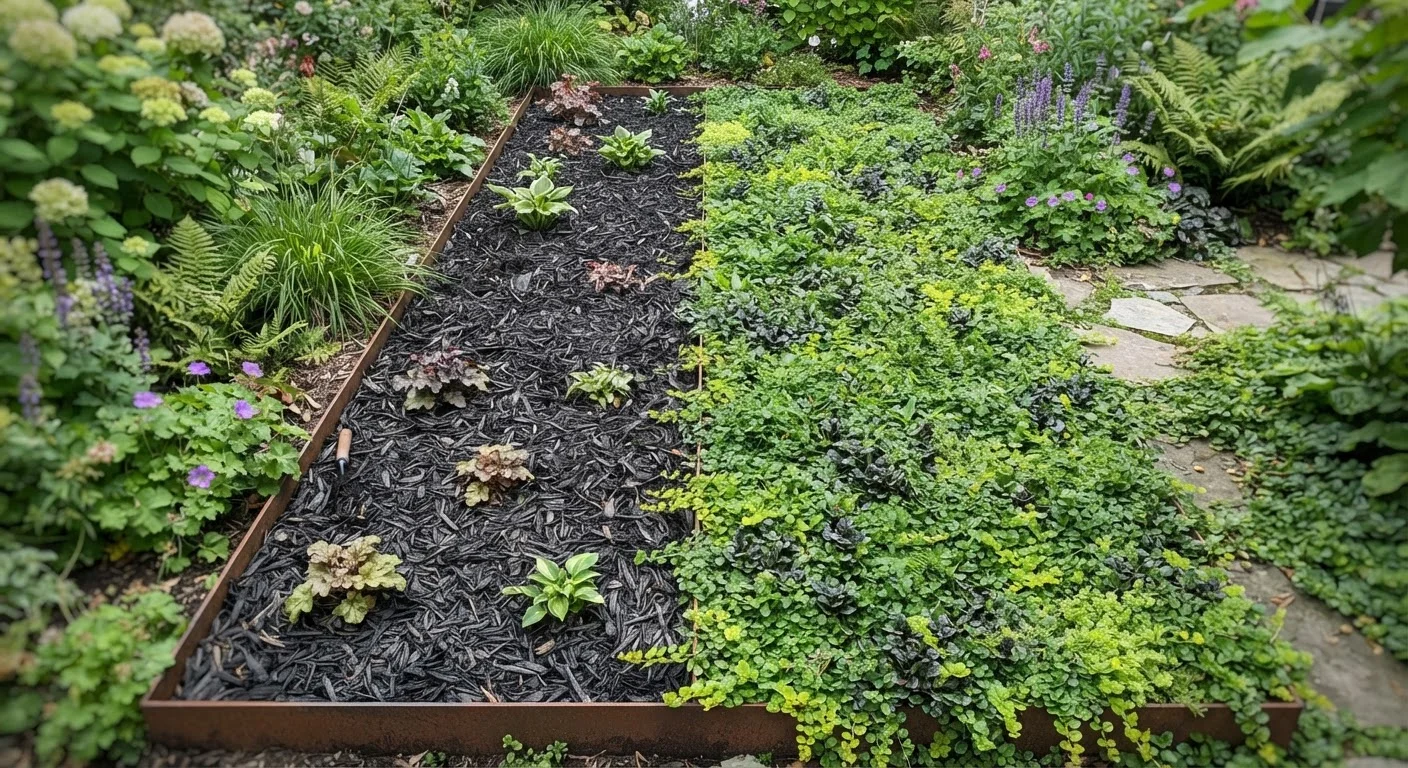
Photo credit: FaqInsider.com
In this article
Organic mulch and living ground covers both suppress weeds, but they work very differently. Here's how to decide which suits your yard.
Key Takeaways
- Organic mulch suppresses weeds immediately but needs replenishing every one to three years as it decomposes.
- Living ground covers take one to two seasons to establish but then largely maintain themselves.
- Mulch excels around individual plants and trees; ground cover works best over larger open areas.
- Ground covers actively improve soil biology over time, while mulch primarily protects and enriches the top layer.
- Slope stability and erosion control favor living ground cover due to root systems holding soil in place.
- Combining both methods - mulching around newly planted ground cover - is a practical transitional strategy.
How Each One Actually Suppresses Weeds
Both mulch and living ground cover block the light and space that weed seeds need to germinate - but they do it through completely different mechanisms, and that distinction shapes everything else about how you use them.
Organic mulch (shredded bark, wood chips, straw, or compost) forms a physical blanket over soil. A layer of two to four inches cuts off light to weed seeds below while also moderating soil temperature and slowing moisture evaporation. The catch: mulch gradually breaks down. As it decomposes, the layer thins and weeds find their way through again, typically requiring top-ups every one to three years depending on the material. That decomposition isn't all bad - it feeds soil microbes and improves soil structure over time. For a deeper look at what mulch actually does to your soil, see our guide to common mulching mistakes.
Living ground cover - plants like creeping thyme, pachysandra, clover, or sedum - suppress weeds by competing for the same resources: light, water, and nutrients. A dense, established mat leaves weed seedlings with nowhere to take hold. Unlike mulch, this barrier is self-renewing. But it asks for patience: most ground covers take a full growing season or two to knit together densely enough to outcompete weeds reliably. During that establishment window, you'll likely need to weed by hand or lay mulch temporarily around young plants.
| Criterion | Organic Mulch | Living Ground Cover |
|---|---|---|
| Setup time | Immediate - same day | 1-2 seasons to establish |
| Ongoing maintenance | Replenish every 1-3 years | Minimal once established |
| Weed suppression | Good - degrades over time | Excellent once dense |
| Erosion control | Limited on slopes | Strong - roots anchor soil |
| Soil improvement | Gradual, surface-level | Deep, active, and ongoing |
| Plant access | Easy - remove and replace | Difficult without disturbing cover |
| Ecological value | Low to moderate | High - habitat and pollinators |
| Best area size | Small to medium beds | Medium to large open areas |
Where Each Strategy Works Best
Site conditions often make the choice for you. Matching the right approach to the right location prevents wasted effort and money.
Use mulch when:
- You're working around established trees, shrubs, or perennials where root competition from spreading plants would be a problem.
- The area needs frequent access - for dividing plants, adjusting spacing, or seasonal planting and removal.
- You want to improve soil fertility as a secondary benefit, particularly with compost-based mulches.
- The area is relatively flat and small enough to refresh affordably each year.
Use living ground cover when:
- You have a large, open area that would require an impractical volume of mulch to cover.
- The site has a slope - root systems stabilize soil in ways that mulch never can. Mulch on a steep grade can wash away in heavy rain.
- You want ecological value: flowering ground covers support pollinators and reduce the hard landscape feel of a yard. This pairs well with the principles explored in our native plants overview.
- Long-term low maintenance is the priority and you're willing to invest effort upfront in establishment.
2-4 inches
Recommended mulch depth for weed suppression
University extension services generally recommend this depth range - shallow layers allow light penetration while layers over four inches can impede water infiltration.
1-2 seasons
Typical ground cover establishment time
Most spreading ground cover plants require at least one full growing season to form a dense enough canopy to reliably crowd out weed competition.
~30%
Potential reduction in soil moisture loss
Research on mulch applications suggests organic mulches can reduce evaporation from the soil surface meaningfully, though results vary by material and climate.
It's worth noting that these approaches aren't mutually exclusive. A common and effective practice is to mulch around newly installed ground cover plants while they spread, then reduce or eliminate mulch replenishment once the canopy closes.
Soil Health and Ecological Impact
If improving your soil over the long run matters to you, both options offer something - but they work differently beneath the surface.
Organic mulch feeds the soil food web as it breaks down. Fungi, bacteria, and earthworms process the organic matter and incorporate it into the upper soil horizon, gradually improving structure and water-holding capacity. The improvement is real but concentrated near the surface and only as persistent as your replenishment schedule. For broader soil-building strategies, our soil improvement techniques guide covers complementary approaches worth considering.
Living ground cover, particularly nitrogen-fixing species like clover, contributes to soil health in a more active and layered way. Root systems improve deep soil structure, microbial communities thrive in the rhizosphere (the zone of soil around roots), and leaf litter adds organic matter continuously without any labor from you. Over many years, a well-chosen ground cover can meaningfully transform compacted or depleted soil.
The trade-off is competition. Ground cover plants draw water and nutrients from the same soil as any nearby ornamentals or edibles. This makes them poorly suited for vegetable beds or areas where you regularly add and remove plants - contexts where mulch remains the more practical tool.
If you're also thinking about rebuilding lawn areas, the related question of seeding versus sodding follows a similar logic of upfront effort versus long-term payoff.

Author
Home & Garden Editorial Team
Home & Garden Editorial Team is the collective byline for our editorial team and contributor network. Articles published under this byline or an editorial pen name are researched, written, and reviewed according to our editorial standards for clarity, consistency, and independence before publication.
View all articles →