
The Case for Native Plants in American Home Landscapes
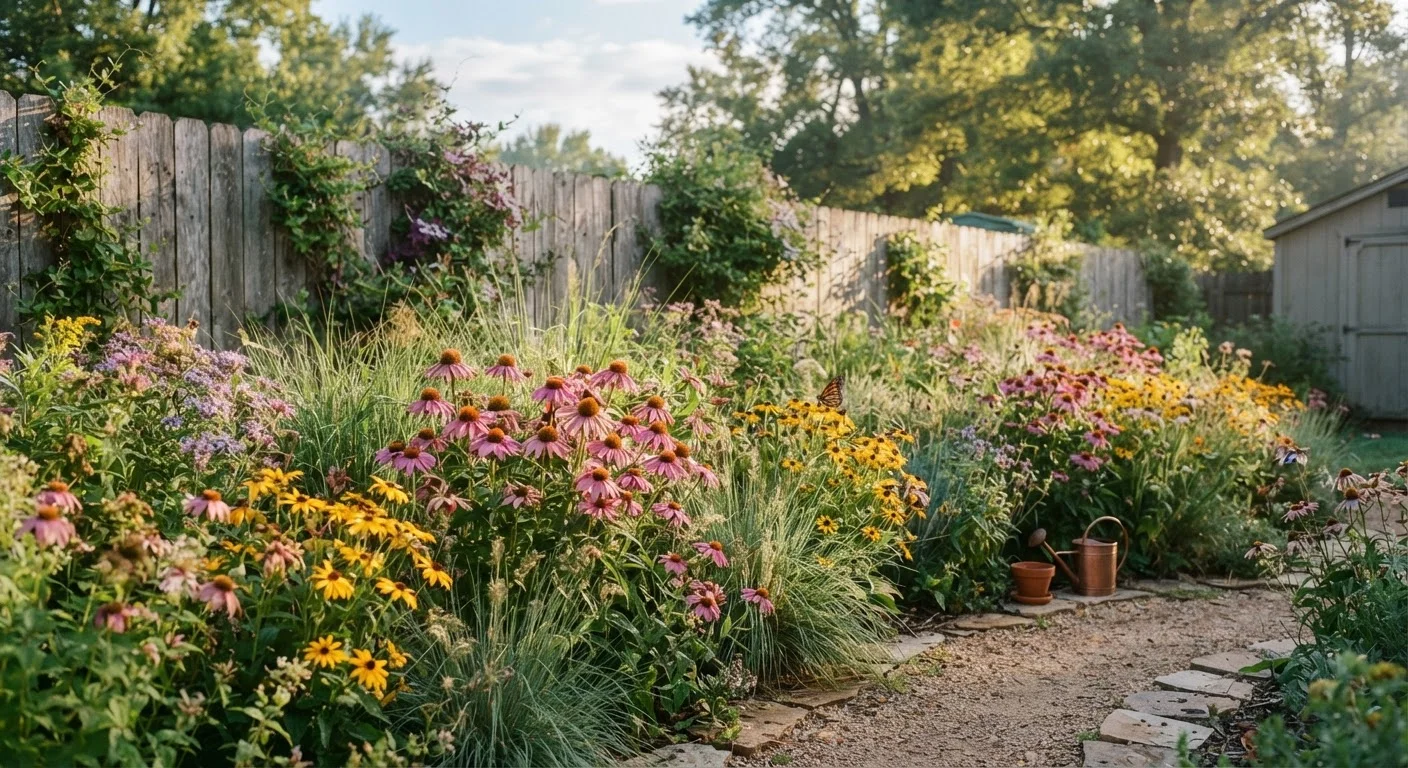
Photo credit: FaqInsider.com
In this article
Explore the ecological and practical advantages — and honest limitations — of choosing native plants for your yard and garden beds.
Key Takeaways
- Native plants are adapted to local soils and climate, often requiring less water and fertilizer once established.
- They support local wildlife, including pollinators and birds, more effectively than most non-native species.
- Sourcing true natives can be challenging, and establishment takes patience during the first one to two seasons.
- A mixed approach - combining natives with well-behaved non-invasive plants - works well for many homeowners.
- Regional variation matters: a plant native to the Pacific Northwest may not suit a Southeastern garden.
Reduced water demand after establishment
Native plants adapted to local rainfall patterns typically need far less supplemental irrigation than non-native ornamentals once their root systems are established, usually after the first full growing season.
Supports native pollinators and wildlife
Research from institutions including the Xerces Society and the Entomological Society of America has documented that native plants support significantly more native bee and butterfly species than exotic alternatives planted in the same region.
Lower fertilizer and pesticide dependency
Because natives are adapted to local soil conditions, they generally thrive without the synthetic inputs that non-native plants often require to compensate for a poor ecological fit.
Long-term cost savings on yard maintenance
Reduced watering, mowing (in lawn-replacement scenarios), and chemical applications translate into meaningful savings on both supplies and labor over multiple growing seasons.
Erosion control and soil health benefits
Many native prairie grasses and wildflowers have root systems that extend several feet deep, helping stabilize soil, improve drainage, and build organic matter over time.
Slow establishment requires patience
Unlike annuals that bloom quickly from transplant, many native perennials invest their first season in root growth, meaning the garden may look underwhelming initially - which can be discouraging for first-time native gardeners.
Sourcing true native species is harder than it looks
Mislabeling, nativar confusion, and limited retail availability mean that finding genetically straight native species often requires seeking out specialty native plant nurseries or regional plant society sales rather than standard garden centers.
Regional specificity demands research
A plant native to one part of the country may be ecologically irrelevant - or even inappropriate - in another region, so blanket lists of "native plants" require careful cross-referencing with your specific ecoregion.
Some natives can spread aggressively
Species like certain mints, goldenrods, or aggressive groundcovers can spread beyond their intended area, requiring management to keep them from overwhelming adjacent plantings or neighboring yards.
HOA restrictions may limit options
Some homeowners associations have aesthetic standards that restrict naturalistic planting styles, potentially conflicting with native meadow gardens or plants that look informal during seasonal die-back.
What Makes a Plant 'Native'?
A native plant is one that evolved naturally in a specific region over thousands of years - without being introduced by humans. In the context of home landscaping, "native" typically means indigenous to your broader ecoregion: the Great Plains, the Appalachian Mountains, the Pacific Coast, and so on. This distinction matters because a species native to coastal Carolina may behave very differently - or struggle entirely - transplanted into a Colorado front yard.
Native plants co-evolved with local soils, rainfall patterns, insects, birds, and fungi. That deep ecological fit is precisely what gives them their practical and environmental advantages. Understanding this context helps you make smarter planting decisions rather than simply swapping any labeled "native" plant into your beds.
For a broader look at designing a garden around returning plants, see our guide on perennials versus annuals.
The Advantages of Going Native
The practical case for native plants is well-supported by horticultural research and long-standing ecological observation.
Reduced water demand after establishment
Native plants adapted to local rainfall patterns typically need far less supplemental irrigation than non-native ornamentals once their root systems are established, usually after the first full growing season.
Supports native pollinators and wildlife
Research from institutions including the Xerces Society and the Entomological Society of America has documented that native plants support significantly more native bee and butterfly species than exotic alternatives planted in the same region.
Lower fertilizer and pesticide dependency
Because natives are adapted to local soil conditions, they generally thrive without the synthetic inputs that non-native plants often require to compensate for a poor ecological fit.
Long-term cost savings on yard maintenance
Reduced watering, mowing (in lawn-replacement scenarios), and chemical applications translate into meaningful savings on both supplies and labor over multiple growing seasons.
Erosion control and soil health benefits
Many native prairie grasses and wildflowers have root systems that extend several feet deep, helping stabilize soil, improve drainage, and build organic matter over time.
70%
Reduction in landscape water use potential
The EPA's WaterSense program estimates that conventional landscaping accounts for up to 30% of household water use, and switching to climate-adapted native plants can significantly reduce that demand.
4x
More native bee species supported
Studies published in ecological journals have found that native plant gardens can support several times more native bee species compared to gardens dominated by non-native ornamentals.
Beyond water savings, natives tend to require fewer synthetic inputs. Their root systems - often far deeper than those of turf grass or annual bedding plants - access nutrients and moisture more efficiently. They also provide habitat that generalist non-native plants simply cannot replicate. Many native bees, for instance, are specialist feeders that depend on specific plant genera to complete their life cycles.
If you're working with limited space, natives can still play a role. Our article on container gardening in small spaces covers how to incorporate plants - including some compact natives - into patios and balconies.
The Honest Limitations
Despite their advantages, native plants are not a universal solution, and it's worth going in with clear expectations.
Slow establishment requires patience
Unlike annuals that bloom quickly from transplant, many native perennials invest their first season in root growth, meaning the garden may look underwhelming initially - which can be discouraging for first-time native gardeners.
Sourcing true native species is harder than it looks
Mislabeling, nativar confusion, and limited retail availability mean that finding genetically straight native species often requires seeking out specialty native plant nurseries or regional plant society sales rather than standard garden centers.
Regional specificity demands research
A plant native to one part of the country may be ecologically irrelevant - or even inappropriate - in another region, so blanket lists of "native plants" require careful cross-referencing with your specific ecoregion.
Some natives can spread aggressively
Species like certain mints, goldenrods, or aggressive groundcovers can spread beyond their intended area, requiring management to keep them from overwhelming adjacent plantings or neighboring yards.
HOA restrictions may limit options
Some homeowners associations have aesthetic standards that restrict naturalistic planting styles, potentially conflicting with native meadow gardens or plants that look informal during seasonal die-back.
One frequently overlooked challenge is sourcing. Many plants sold as "natives" at big-box retailers are nativar cultivars - cultivated varieties bred for traits like unusual color or compact form. Some nativars retain most ecological benefits; others have been shown to offer reduced value to pollinators compared to their straight-species counterparts. Buying from a reputable native plant nursery or a regional native plant society sale gives you greater confidence in what you're actually planting.
It's also worth pairing natives thoughtfully with their neighbors. Our guide to companion planting combinations can help you think through which plants support each other ecologically and practically.
Getting Started: Practical Steps for Homeowners
Transitioning part or all of your landscape to native plants doesn't have to happen all at once. A phased approach reduces cost, spreads the learning curve, and lets you observe what works in your specific conditions before committing to a full redesign.
- Identify your ecoregion. The U.S. EPA's ecoregion maps and state-level native plant society websites are reliable starting points for understanding which species belong in your area.
- Start with a defined bed. Converting one garden bed or a section of lawn to natives is far more manageable than a whole-yard overhaul and gives you a working sample to learn from.
- Plan for the establishment window. Most native perennials follow the saying: "sleep, creep, leap" - the first year they establish roots, the second they spread modestly, and the third they take off. Consistent watering in year one is still important.
- Layer for diversity. A mix of native trees, shrubs, perennials, and groundcovers creates habitat structure that a monoculture of any single plant cannot.
Check Before You Plant: HOA and Local Codes
Some municipalities and homeowners associations have rules governing what can be planted in front yards or how naturalistic plantings must be maintained. Before committing to a native meadow or lawn replacement, review your local codes and HOA guidelines. Many areas have been updating these rules to accommodate ecologically beneficial landscapes, but it's worth verifying your specific situation before you dig.
For an in-depth look at the low-maintenance payoff of native landscaping over time, see our companion piece on native plants and low-maintenance yards.

Author
Home & Garden Editorial Team
Home & Garden Editorial Team is the collective byline for our editorial team and contributor network. Articles published under this byline or an editorial pen name are researched, written, and reviewed according to our editorial standards for clarity, consistency, and independence before publication.
View all articles →