
Understanding Feline Play Aggression and How to Redirect It
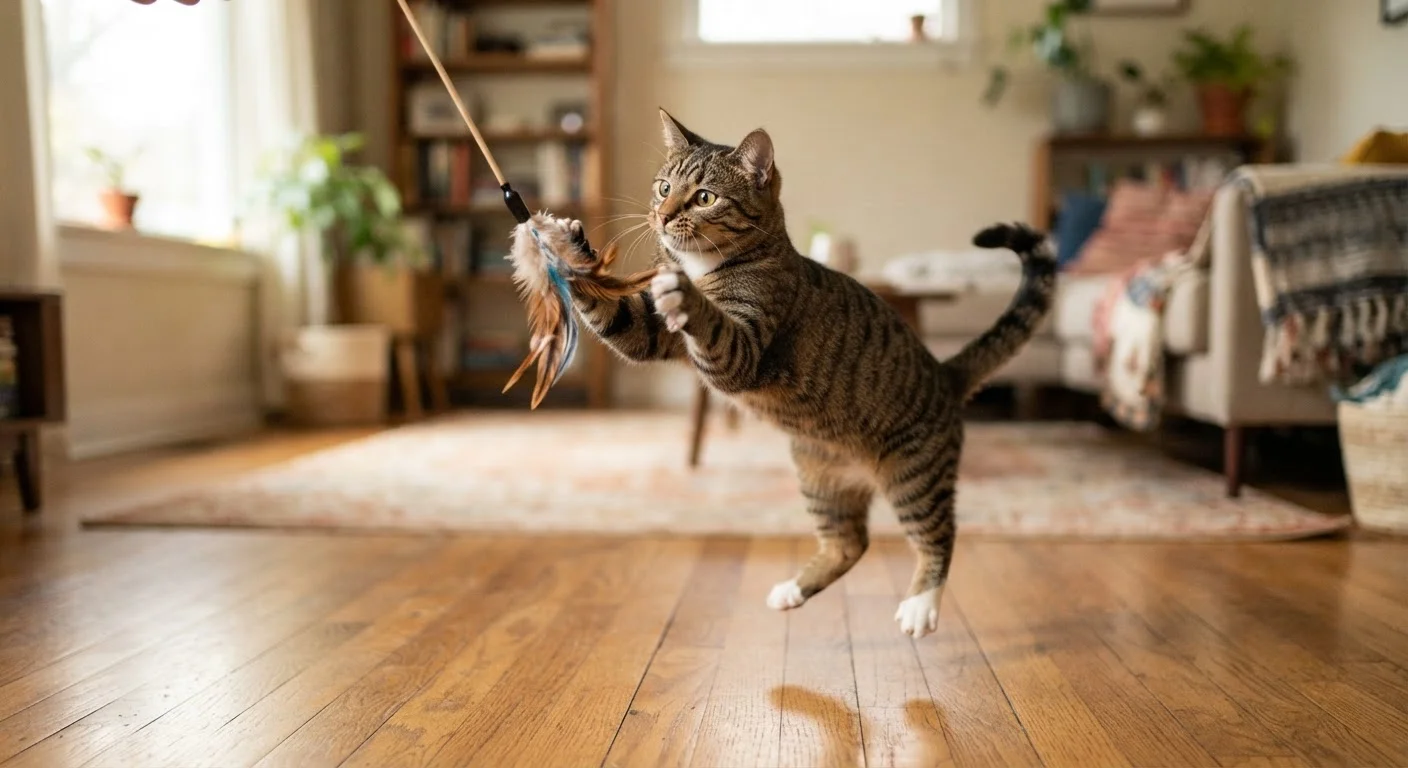
Photo credit: FaqInsider.com
Biting and scratching during play isn't meanness — it's normal cat behavior that can be shaped. Here's how to redirect it without punishing natural instincts.
Key Takeaways
- Play aggression is normal predatory behavior, not a sign your cat is mean or broken.
- Hands and feet should never be used as play toys - redirect to wands or plush prey items.
- Consistent daily play sessions reduce the frequency and intensity of unwanted biting.
- Reading your cat's pre-attack body language lets you intervene before contact happens.
- Punishment backfires with cats - calm redirection is more effective and less stressful for both of you.
What Play Aggression Actually Is
If your cat ambushes your ankles or latches onto your hand with claws fully engaged, it can feel alarming - even painful. But in most cases, this is play aggression: predatory behavior directed at the wrong target. Cats are hardwired hunters, and without an appropriate outlet, their stalking, pouncing, and biting instincts will find one on their own - usually you.
Play aggression is most common in young cats and kittens, especially those raised without feline littermates who would have taught bite inhibition through mutual rough play. Solo kittens never receive that feedback, so they arrive in your home without a clear sense of how hard is too hard.
Understanding whether you're dealing with play aggression - versus fear-based or redirected aggression - matters before you begin any training. Our field guide to cat body language can help you decode the signals your cat is sending right before a swipe. Play-aggressive cats typically show dilated pupils, a low crouched posture, and a twitching tail tip - but their body stays loose and their ears face forward rather than flattening back.
What you will need
If aggression seems sudden, escalates quickly, or is paired with other unusual behaviors, it's worth ruling out a medical cause. Some behavioral changes warrant a vet visit before any training plan begins.
How to Redirect Play Aggression: Step by Step
Redirecting play aggression isn't about suppressing your cat's hunting drive - it's about giving that drive a better target. The steps below work together as a consistent system, not a one-time fix. Results typically improve over several weeks of practice.
Stop using hands and feet as play objects immediately
This is the single most important habit change. Wiggling fingers under blankets or letting a cat chase your feet may seem harmless with a kitten, but it actively teaches that skin is prey. Every time it happens, you reinforce the behavior you're trying to stop.
From today forward, initiate all interactive play with a toy - never a body part. If a play session is over and your cat is still wound up, place a plush toy in front of them and walk away calmly rather than engaging further with your hands.
Learn your cat's pre-attack signals and intervene early
Cats rarely strike without warning - the signals are just easy to miss. Watch for: tail lashing, dilated pupils, a low crouched body, skin rippling along the back, and intense focus locked onto a target. When you see these cues, you have a brief window to redirect before contact happens.
Immediately introduce a wand toy and move it away from you in short, erratic bursts to simulate fleeing prey. This shifts your cat's focus from you onto the toy before the pounce is committed.
Run two structured play sessions daily
A cat with sufficient predatory outlet is far less likely to hunt you. Aim for two 10-15 minute sessions per day - one in the morning and one in the early evening, which align with cats' natural crepuscular (dawn and dusk) activity peaks.
During each session, move the wand toy in ways that mimic real prey: low to the ground, pausing, darting behind furniture, changing direction unpredictably. Allow your cat to catch the toy frequently - hunting without capture is frustrating and can increase arousal rather than relieve it.
Respond to biting with stillness, not reaction
When a bite or scratch does land, your instinct is to pull away or yelp - but fast movement triggers the cat's prey-chase reflex and often escalates the attack. Instead, go completely still and say a firm, quiet "no" or "ouch." Then withdraw your attention by standing up and walking away for 30-60 seconds.
This teaches your cat that contact ends the fun, without the adrenaline spike that dramatic reactions cause. Consistency matters enormously here - every person in the household needs to respond the same way.
Enrich the environment between sessions
A cat that is mentally and physically engaged throughout the day has less pent-up predatory energy to discharge on you. Add environmental enrichment between active play sessions: puzzle feeders, window perches with outdoor views, cat trees for climbing, and rotating the toy selection so novelty is maintained.
Even small changes - a paper bag on the floor, a cardboard box with holes cut in the sides - give a bored cat something to investigate and stalk that isn't you.
Consistency Across the Household Matters
If one person redirects properly while another still roughhouses with their hands, progress will stall. Brief everyone in the home - including regular visitors - on the house rules for cat play. A unified approach is significantly more effective than individual effort alone.
Indoor cats in particular benefit from structured play because they lack the environmental stimulation that outdoor cats encounter naturally. If you're weighing lifestyle options for your cat, our overview of indoor vs. outdoor trade-offs covers what the evidence suggests about enrichment and safety.

Author
Pets & Animals Editorial Team
Pets & Animals Editorial Team is the collective byline for our editorial team and contributor network. Articles published under this byline or an editorial pen name are researched, written, and reviewed according to our editorial standards for clarity, consistency, and independence before publication.
View all articles →